
Waterborne vs Oil-Modified Polyurethane
The choice comes down to three things: color, odor and schedule.
- 5.0★★★★★85 Google reviews
- Since 2008
- 185 New Jersey towns
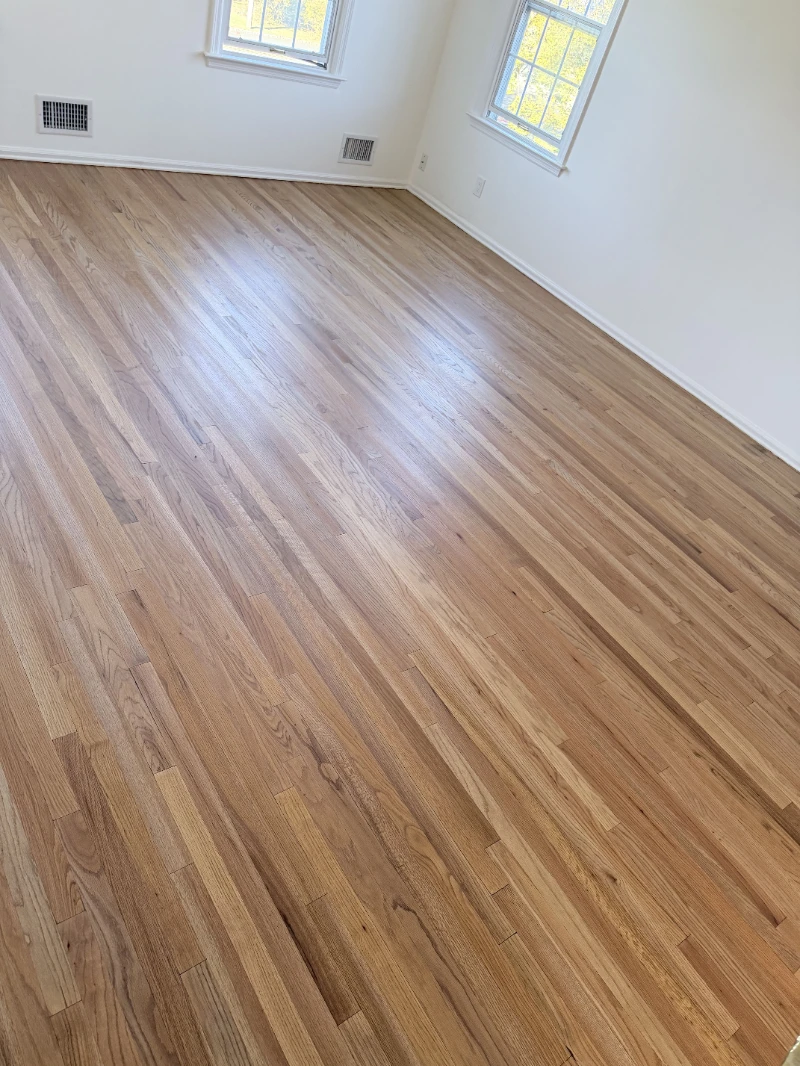
Oil-modified polyurethane adds a warm amber tone that deepens over the years, has strong solvent odor during application and cures slowly. Waterborne polyurethane keeps the wood's natural color, has far lower odor and returns the room to use faster.
Color is the decision most people are actually making
Oil-modified ambers the wood and keeps ambering; waterborne holds the color the floor had on the day it was finished.
On red oak, oil-modified pushes the floor warmer and more orange over time. On white oak finished for a light, contemporary look, that same ambering is exactly what the owner is trying to avoid.
Neither is wrong. But the amber is not reversible without sanding, so it is worth deciding deliberately rather than inheriting it from whatever the contractor keeps on the truck.
Odor and occupancy
Solvent-based finishes carry strong odor during application and cure; waterborne finishes are markedly lower and let a household return sooner.
For an occupied house — especially with children, pets or anyone with respiratory sensitivity — this is often the deciding factor regardless of the color preference.
Schedule and cost
Waterborne finishes dry faster between coats and cure sooner, which compresses the job; two-component waterborne products cost more per square foot than oil-modified.
The comparison that matters is total cost of the project against the number of days the household is displaced, not the price per gallon.
Frequently asked questions
Which lasts longer, waterborne or oil-based polyurethane?
A quality two-component waterborne finish is competitive with or better than oil-modified polyurethane on abrasion resistance. Longevity depends more on the specific product and on how well it was applied than on the category.
Will waterborne finish make my floor look pale?
It keeps the wood's natural color rather than adding amber. If you want warmth, it can be achieved with stain under the finish instead of relying on the finish to supply it.
How long does the smell last with oil-based polyurethane?
Solvent odor persists through application and into the cure period, which is measured in days rather than hours. Waterborne finishes reduce this substantially.
Can I put waterborne finish over an old oil-based floor?
Yes, when the floor is sanded back to bare wood first. Recoating over an existing finish without sanding depends on the condition and compatibility of what is already there.
Sources & references
- Bona Traffic HD — Technical Data Sheet (manufacturer) — https://www.bona.com/globalassets/catalogassets/tds-bona-traffic-hd-us-enus_20260527131533.pdf
- NWFA — National Wood Flooring Association — https://nwfa.org
Need this looked at on your floor?
Free written estimate, and moisture readings taken before we quote.
Request a free estimate