
Refinishing & Sanding
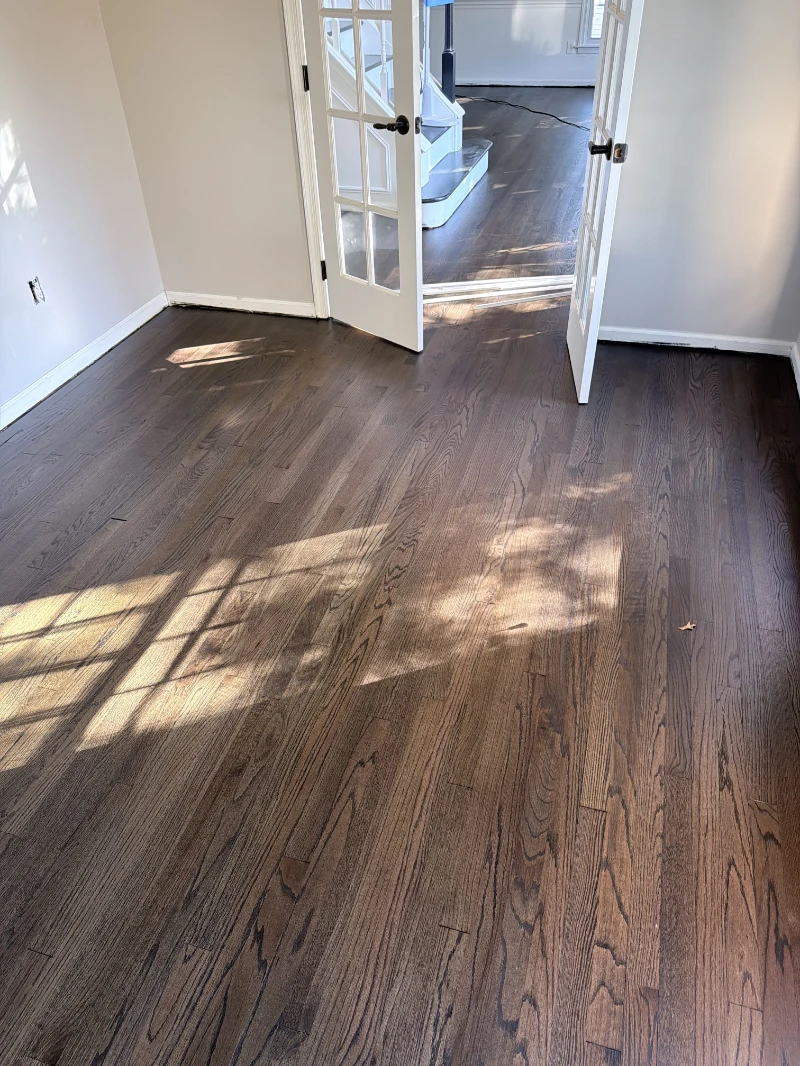
Restoring existing wood floors through sanding, staining and refinishing, without replacing the boards.
- 5.0★★★★★85 Google reviews
- Since 2008
- 185 New Jersey towns
The 5 services in this area
Which of these does your floor actually need?
If the wear is still in the finish, a screen and recoat is enough. Once wear has reached the wood, it takes a full refinish.
The distinction is checkable at home. Leave a drop of water on a dull traffic area for a few minutes. If it beads, the finish is intact and a recoat will restore it. If the wood darkens, the finish is gone there and a recoat would seal in the gray rather than remove it.
It matters financially, because a refinish consumes wear layer and a recoat does not. Every floor has a finite number of sandings in it, and recoating on schedule is what keeps that number from being spent early.
What refinishing will not fix
Sanding levels a surface. It does not correct moisture, subfloor movement, or damage that runs deeper than the wood available above the tongue.
A cupped floor is the clearest case. Sanding it flat before the moisture equalizes produces a crowned floor later, which is a worse result created by the repair itself.
Where a floor has no wear layer left, we say so rather than selling a sanding that cannot deliver.
How the work is quoted
Square footage is the starting point, not the answer — edge work, stairs, closets, stain, coat count and lead-safe requirements move it substantially.
A room full of closets, radiators and built-ins carries far more hand work per square foot than an open room of the same area, because the large machine only reaches the field.
In housing built before 1978 — roughly two thirds of the towns we serve — disturbing painted baseboards and stair components can bring EPA lead-safe requirements into the job.
Not sure which of these you need?
Send photos of the floor. We will tell you which service applies and, just as often, which one you do not need.
Request a free estimate