
EPA RRP — Lead-Safe Work in Pre-1978 Homes
The EPA's Renovation, Repair and Painting rule requires certified firms and contained work practices whenever a job disturbs painted surfaces in housing built before 1978.
- 5.0★★★★★85 Google reviews
- Since 2008
- 185 New Jersey towns
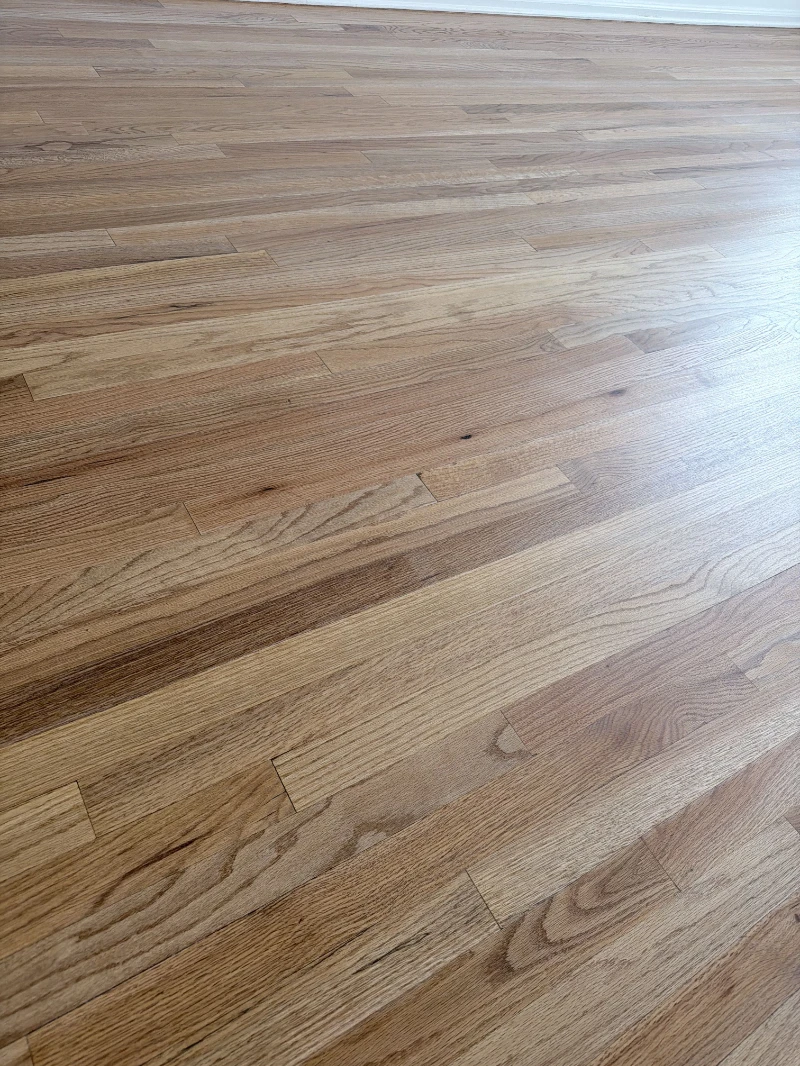
In the New Jersey towns VGJ Floors serves, roughly 65% of the housing stock predates 1978 — so this is the normal case, not the exception.
Key facts
| Applies to | Housing built before 1978 |
|---|---|
| Requires | EPA-certified firm and contained work practices |
| Issued by | U.S. Environmental Protection Agency |
| Median pre-1978 share, VGJ service area | About 65% of housing units |
| Towns above 60% pre-1978 | 107 of the 185 served |
Why this matters for floor sanding specifically
Sanding is the work method most likely to disturb painted surfaces, because baseboards, thresholds and stair components sit directly in the path of the machine.
A floor field on its own is usually bare wood. The risk sits at the edges: shoe molding, baseboard, stair risers and door casings, which in a pre-1978 house may carry layers of paint going back decades.
Dust containment and lead-safe practice are therefore not the same conversation. A dustless sanding system manages nuisance dust; RRP compliance addresses a regulated hazard, and the two are governed by different rules.
How common pre-1978 housing is in this service area
Across the 185 municipalities VGJ Floors serves, the median share of pre-1978 housing is about 65%, and 107 of those towns are above 60%.
The range is wide. Towns like Chesterfield and Upper Freehold, built out after 2000, sit near 20%. Older communities in Essex, Hudson and Union counties run past 80%.
That variation is why the question has to be answered per address rather than per region. Two towns twenty minutes apart can fall on opposite sides of it.
Figures are derived from US Census ACS 2023 5-year housing data. Because the Census reports a 1970–1979 bracket rather than a 1978 cut, the pre-1978 share is an approximation; the method is published on our data page.
What to ask a contractor before work begins
Ask whether the firm is EPA Lead-Safe certified, and how they will contain and clean the work area at the edges of the floor.
A contractor working in a pre-1978 house should be able to answer both without hesitation. If the answer is that lead is not a concern because the floor itself is bare, that answer is addressing the wrong surface.
Frequently asked questions
Does floor refinishing fall under the EPA RRP rule?
It can. The rule is triggered by disturbing painted surfaces in pre-1978 housing, and floor sanding routinely disturbs painted baseboards, shoe molding and stair components.
How do I know if my house was built before 1978?
Your municipal tax assessment record lists the year built, and your deed or title paperwork usually does as well.
Is dustless sanding the same as lead-safe work?
No. Dust containment reduces airborne nuisance dust. Lead-safe practice under the RRP rule is a separate regulatory requirement with its own containment, cleaning and verification steps.
What share of homes in my area are pre-1978?
It varies widely by town, from around 20% in the newest communities to over 80% in the oldest. Our per-town pages list the figure for each municipality we serve.
Sources & references
- US EPA — Renovation, Repair and Painting Program — https://www.epa.gov/lead/renovation-repair-and-painting-program
- US Census Bureau — American Community Survey 2023 5-Year Estimates, Table B25034 — https://www.census.gov/programs-surveys/acs
Need this looked at on your floor?
Free written estimate, and moisture readings taken before we quote.
Request a free estimate