
Stair Refinishing & Installation
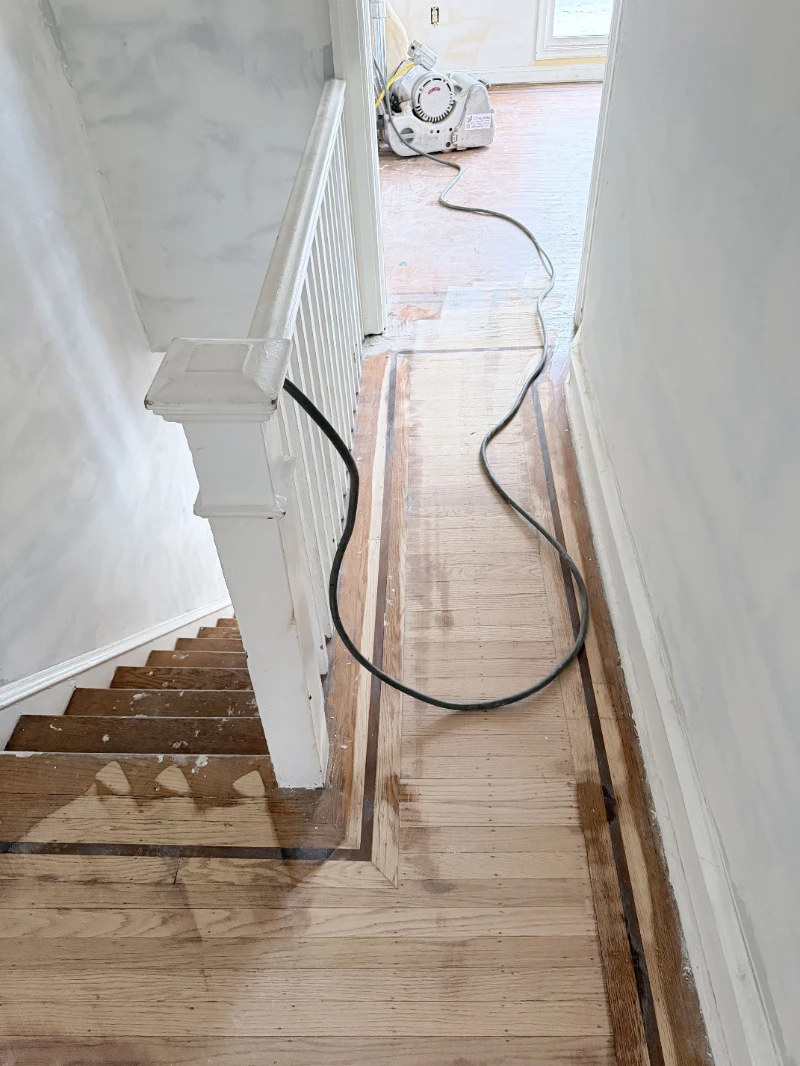
Stairs are the most labour-intensive surface in a house. Every tread and riser is an edge, every baluster is an obstruction, and the machines that make floor sanding efficient do not fit. Stairs are also the one surface a household cannot stop using while the work is done.
- 5.0★★★★★85 Google reviews
- Since 2008
- 185 New Jersey towns
Key facts
| Work method | Largely hand and small-tool work — floor machines do not apply |
|---|---|
| Components | Treads, risers, stringers, nosing, balusters, handrail |
| Access | Staged so the household keeps a usable route |
| Pre-1978 homes | Painted risers and balusters can trigger EPA RRP requirements |
Why stairs cost more per square foot than floors
There is almost no field — a staircase is nearly all edge, corner and detail work, done by hand.
A floor is mostly open area that a large machine covers quickly, with perimeter work at the edges. A staircase inverts that ratio entirely.
Add balusters, which cannot be removed on most stairs, and every tread becomes hand work around obstructions.
The household still has to use the stairs
Work is staged so there is always a usable route, which means the job takes longer than the same surface area on a floor.
Alternating treads, or splitting the staircase into sections across days, keeps the house functional. It also means finish cure schedules have to account for traffic that cannot be avoided.
Painted risers in older houses
In pre-1978 housing, painted risers, stringers and balusters are exactly the surfaces the EPA lead-safe rule addresses.
Stairs are frequently the single largest area of painted surface disturbed in a flooring project. This is a question to settle before the work starts, not during it.
Finish choice matters more on stairs
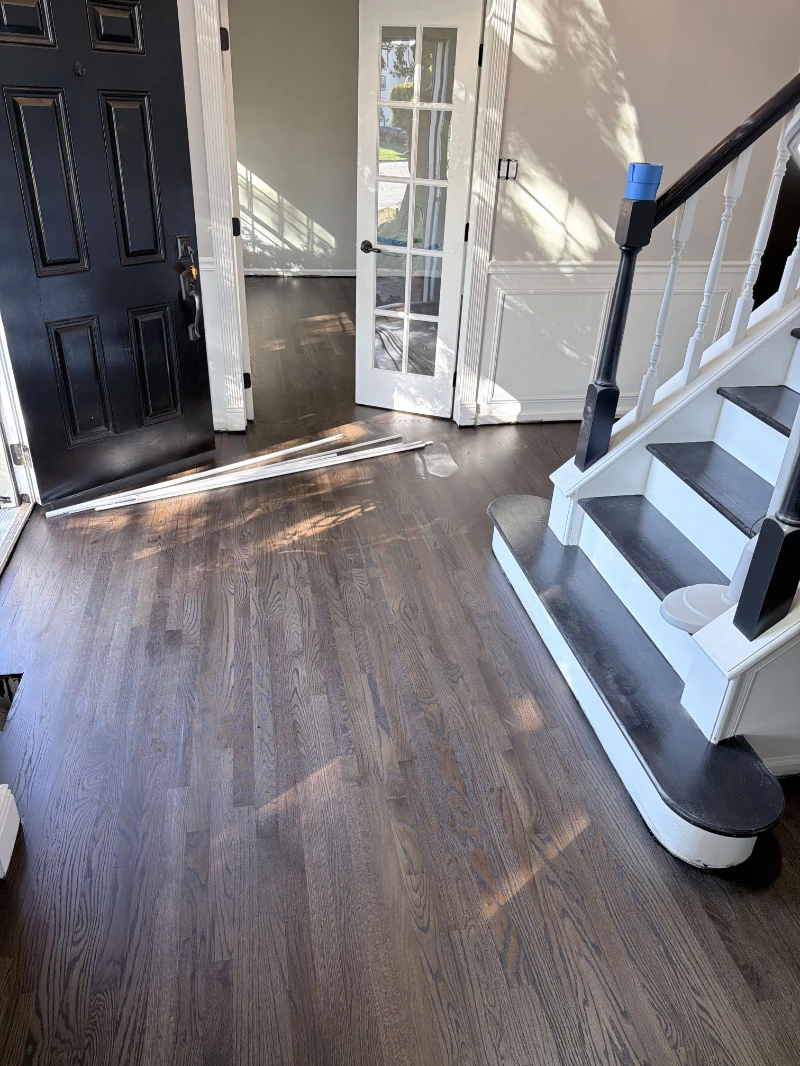
Stairs take concentrated wear in a narrow path, and the nosing takes the worst of it.
Slip resistance matters here in a way it does not on a flat floor. A very high-gloss finish on stair treads is a decision worth making deliberately.
How VGJ Floors refinishes a staircase
Assess components and access
Review treads, risers, nosing and balusters, and plan staging so the household keeps a usable route.
Address lead-safe requirements
In pre-1978 homes, confirm requirements before disturbing painted risers, stringers or balusters.
Contain and protect
Seal the work area and protect adjoining floors and walls.
Hand-sand components
Work treads, risers and details by hand and with small tools, around balusters that cannot be removed.
Stage the finishing
Finish in sections or alternating treads so the staircase stays usable during cure.
Final inspection
Check nosing, transitions to the floor above and below, and the consistency of sheen throughout.
Frequently asked questions
Can we use the stairs while they are being refinished?
Yes, with staging. Work is done in sections or on alternating treads so there is always a usable route, which extends the schedule but keeps the house functional.
Why do stairs cost more than floors?
A staircase is almost entirely edge and detail work done by hand, with balusters as obstructions. There is no open field for a machine to cover quickly.
Do balusters have to be removed?
On most stairs they cannot be, so the work is done around them by hand. That is a large part of why stairs take longer.
Can stair treads be replaced without rebuilding the staircase?
Often yes. Treads can be replaced individually, though matching an existing profile and nosing takes care.
Should stairs match my floor exactly?
Usually they are matched closely. Perfect matching depends on species and age, and stairs and floors often started as different material even in the original construction.
Get this quoted properly
We take moisture readings and check wear layer before putting a number on the job — so the quote matches what your floor can support.
Request a free estimate