
Pet Stain & Odor Floor Repair
Pet urine that sat on a wood floor does not stay on the surface.
- 5.0★★★★★85 Google reviews
- Since 2008
- 185 New Jersey towns
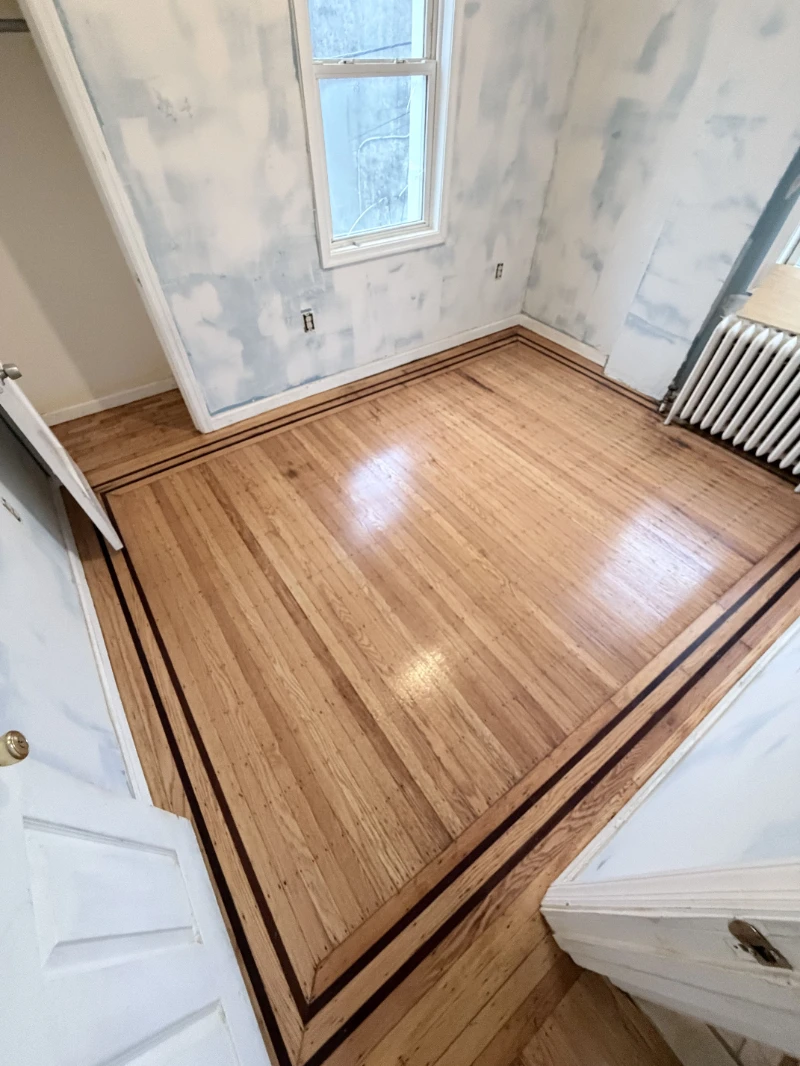
It passes through the finish, into the wood, and often into the subfloor beneath. Light discoloration sands out. The dark, near-black stains do not — those boards are replaced, and the subfloor beneath them has to be addressed too.
Key facts
| Light surface discoloration | Usually sands out |
|---|---|
| Dark or black staining | Penetrated deep — board replacement |
| Odor source | Frequently the subfloor, not the visible flooring |
| Sealing | Subfloor treatment before new flooring goes down |
Why the dark stains do not sand out
The black colour is a chemical reaction deep in the wood, not a surface deposit, and it typically runs deeper than the remaining wear layer.
You can sand until the board is too thin to be a floor and still see it. At that point you have spent the floor's remaining life and still have the stain.
Replacement is the honest answer for those boards. A contractor promising to sand out a black pet stain is either inexperienced or planning to hide it under a very dark stain colour.
The smell is usually in the subfloor
If odor persists after the flooring is removed, the liquid reached the subfloor — and replacing the flooring alone will not solve it.
This is the step most often skipped, and it is why some homeowners replace a floor and still smell the problem in humid weather.
The subfloor has to be assessed, treated or replaced before new flooring goes down. Sealing over an untreated subfloor buys a season, not a solution.
What we can and cannot promise
We can remove what is removable and replace what is not; we cannot guarantee that every trace of a years-old, whole-room problem is gone.
Where damage is extensive and long-standing, we will say plainly that full replacement of the flooring and subfloor treatment is the reliable path, rather than selling a repair that may disappoint.
How VGJ Floors addresses pet stains and odor
Map the damage
Identify affected areas, including staining not visible under existing furniture or rugs.
Test sanding depth
Determine whether discoloration is within reach of sanding or has penetrated past the wear layer.
Remove unsalvageable boards
Take up boards where staining runs deeper than sanding can reach.
Assess and treat the subfloor
Check whether the subfloor is contaminated, and treat or replace it before new material goes down.
Weave in replacements
Stagger new boards into the surrounding floor so no patch outline remains.
Refinish to blend
Sand and refinish so repaired and original areas match in colour and sheen.
Frequently asked questions
Can pet stains be sanded out of hardwood floors?
Light surface discoloration usually can. Dark or black staining is a reaction deep in the wood, generally deeper than the remaining wear layer, and those boards need replacement.
Why does my house still smell after replacing the floor?
Because the urine reached the subfloor. If the subfloor was not assessed and treated, odor persists and tends to return in humid weather.
Will a dark stain colour hide pet damage?
It can mask it visually, but it does not address odor and it commits your floor to a dark colour to conceal a problem that is still there.
How do I know how deep the damage goes?
A test sanding in an affected area shows whether the discoloration lifts or continues into the wood.
Is it worth repairing or should I replace the whole floor?
It depends on how many boards are affected and how much wear layer remains. Scattered damage on a floor with life left is a repair; widespread deep staining usually is not.
Get this quoted properly
We take moisture readings and check wear layer before putting a number on the job — so the quote matches what your floor can support.
Request a free estimate