
Parquet & Herringbone Restoration
Parquet and herringbone floors are laid in geometric patterns, which means there is no single grain direction to sand with.
- 5.0★★★★★85 Google reviews
- Since 2008
- 185 New Jersey towns
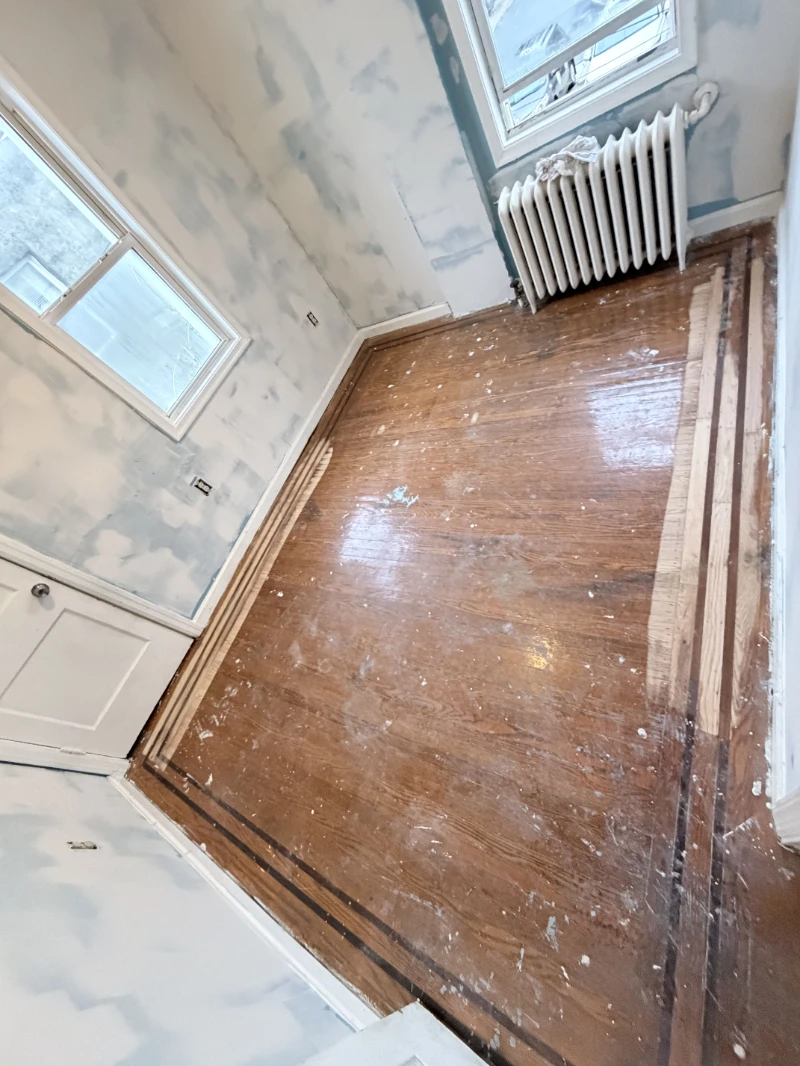
They require a different approach from strip flooring, and they are common in exactly the older New Jersey housing where the floors are most worth saving.
Key facts
| Pattern types | Herringbone, chevron, block and mosaic parquet |
|---|---|
| Why it differs | No single grain direction — sanding runs across grain on some pieces regardless |
| Common issues | Loose or missing pieces, failed original adhesive, thin wear layer |
| Common in | Pre-1940 and mid-century New Jersey housing |
Why parquet cannot be sanded like a strip floor
Every pattern puts adjacent pieces at opposing grain angles, so any single direction of sanding cuts with the grain on some pieces and across it on others.
Sanding across grain leaves marks that a strip floor never shows. The work is done in stages at changing angles, finishing finer than a strip floor would require, to keep the surface uniform.
It takes longer, and a crew that quotes it at strip-floor rates has either not done it before or is planning to sand it like a strip floor.
Wear layer is usually the limiting factor
Parquet pieces are frequently thinner than strip flooring, so the number of sandings a parquet floor can survive is smaller.
Many of these floors have already been refinished once or twice across their life. Assessing what remains before starting is not optional — it decides whether the floor can be restored at all.
Where the wear layer is gone, we say so. There is no version of sanding that adds wood back.
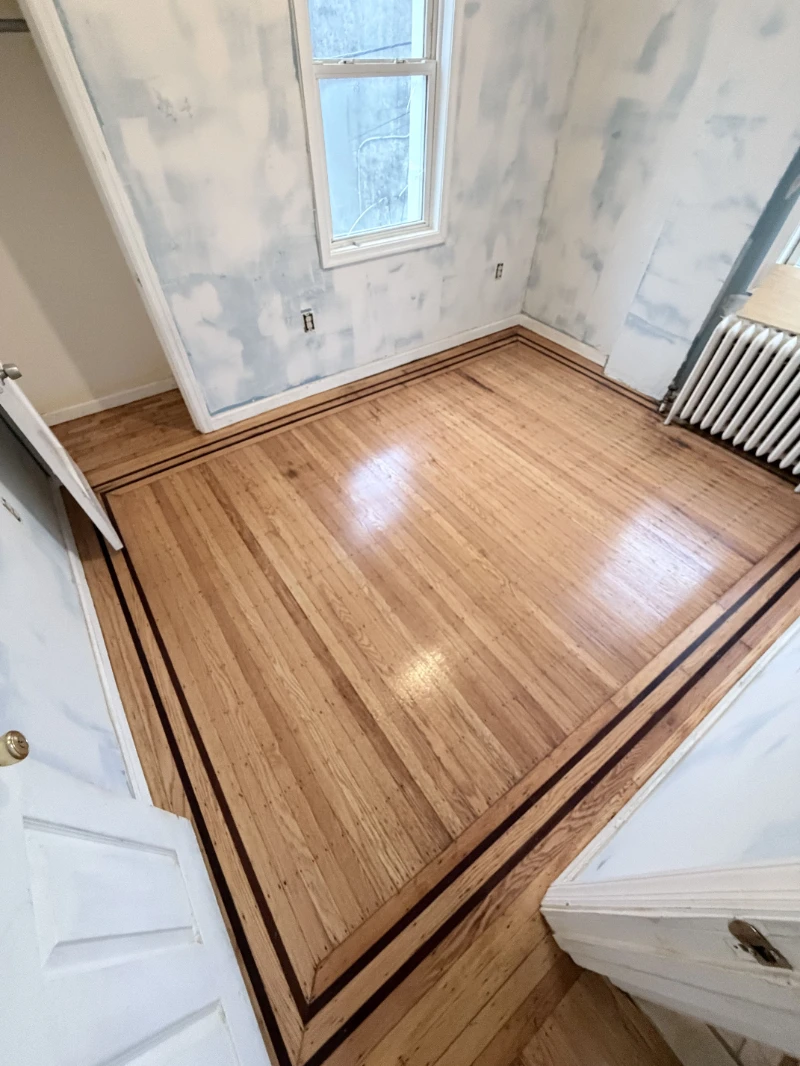
Loose pieces and old adhesive
Original adhesives from decades ago fail over time, and pieces lift, shift or go missing before the sanding question even arises.
Re-securing loose pieces and sourcing replacements for missing ones comes first. Matching a discontinued pattern is often the hardest part of the job, and sometimes material is salvaged from a closet or under a radiator where it will not be missed.
Worth restoring rather than replacing
These floors are frequently original to the house and cannot be reproduced at reasonable cost, which changes the economics against replacement.
A 1920s herringbone floor is a feature of the house. Replacing it with new material is both expensive and a loss of something that cannot be put back.
How VGJ Floors restores a parquet or herringbone floor
Assess wear layer and pattern
Determine remaining thickness and identify the pattern and piece dimensions for any replacement needed.
Secure and replace pieces
Re-adhere loose pieces and source or salvage replacements for missing ones before sanding.
Sand at changing angles
Work in stages across the pattern rather than in one direction, to avoid cross-grain marks.
Refine to a finer finish
Take the final abrasion finer than a strip floor requires, because cross-grain scratch shows more readily.
Inspect under raking light
Check the whole floor for pattern-related scratch before any finish is applied.
Stain and finish
Apply colour if specified and build finish coats per the manufacturer's schedule.
Frequently asked questions
Can a herringbone floor be refinished?
Yes, if wear layer remains. The process differs from strip flooring because there is no single grain direction, so it is sanded in stages at changing angles.
Can missing parquet pieces be replaced?
Often. Matching a discontinued pattern is the hard part, and material is sometimes salvaged from a closet or another low-visibility area of the same floor.
Why does parquet restoration cost more than a strip floor?
It takes longer. Multi-angle sanding, a finer final abrasion and piece-by-piece repair all add labour compared with a strip floor of the same area.
My parquet pieces are lifting. Can that be fixed?
Usually yes. Original adhesive failing after decades is common, and pieces can be re-secured before refinishing.
Is it worth restoring an old parquet floor?
Usually. These floors are often original to the house and cannot be reproduced at reasonable cost, which makes restoration compare well against replacement.
Get this quoted properly
We take moisture readings and check wear layer before putting a number on the job — so the quote matches what your floor can support.
Request a free estimate