
Water Damage Floor Repair
When a wood floor gets wet, the urgent work is drying, not flooring.
- 5.0★★★★★85 Google reviews
- Since 2008
- 185 New Jersey towns
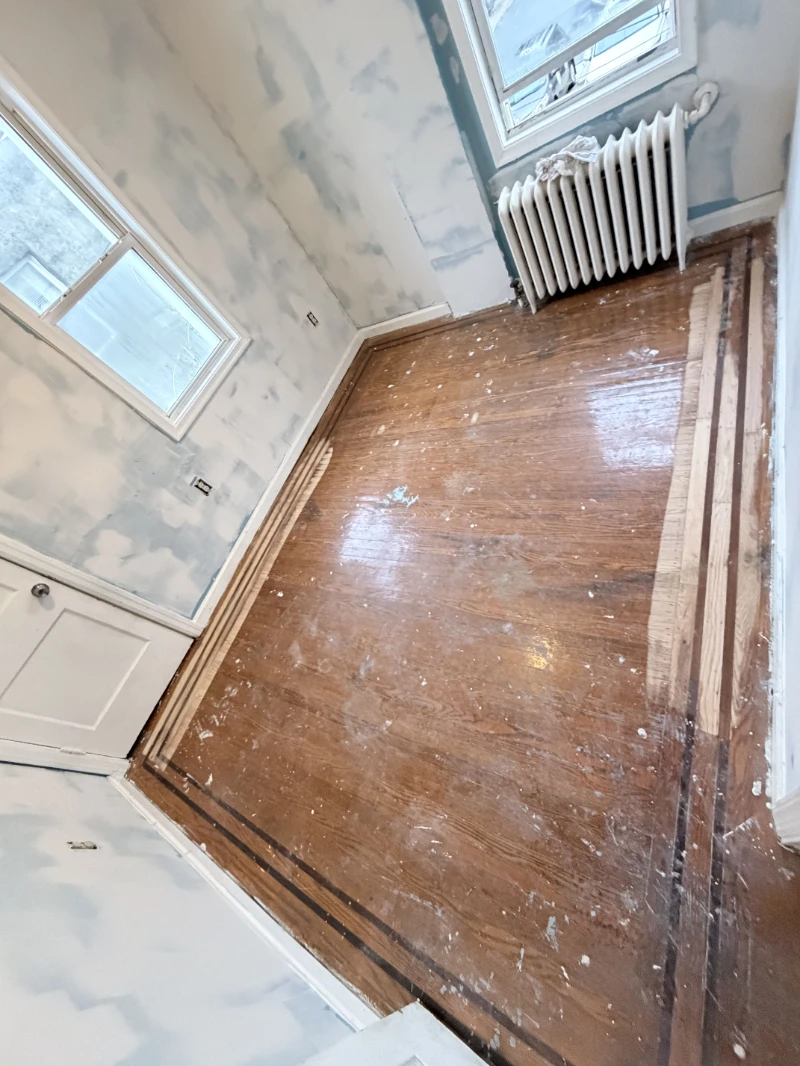
Boards that look ruined often flatten out substantially as they equalize, and boards that look fine can be delaminating underneath. The mistake that costs the most is sanding too early.
Key facts
| First priority | Stop the source and dry the assembly, including the subfloor |
|---|---|
| Do not | Sand a cupped floor before it has equalized |
| Common outcome | Partial board replacement plus refinishing, rather than full replacement |
| Insurance | Document conditions and readings early — claims depend on evidence |
Why sanding early makes it worse
A cupped floor sanded flat becomes a crowned floor once the boards dry and flatten — a permanent defect created by the repair.
Cupping means the underside of the boards holds more moisture than the top. As the assembly dries, the boards flatten on their own, often far more than anyone expects.
Sanding while the boards are still cupped removes material from the raised edges. When the board then flattens, the centre stands proud. There is no way to recover from this except more sanding, on a floor that has already lost wear layer.
Waiting is the intervention. It is also the hardest thing to sell to a homeowner who wants their house back.
Drying the subfloor, not just the surface
The visible floor dries first; the subfloor and the cavity beneath it hold moisture much longer, and that is what keeps driving the cupping.
This is why readings matter more here than anywhere else. Surface dryness tells you almost nothing about whether the assembly is ready.
What usually survives and what does not
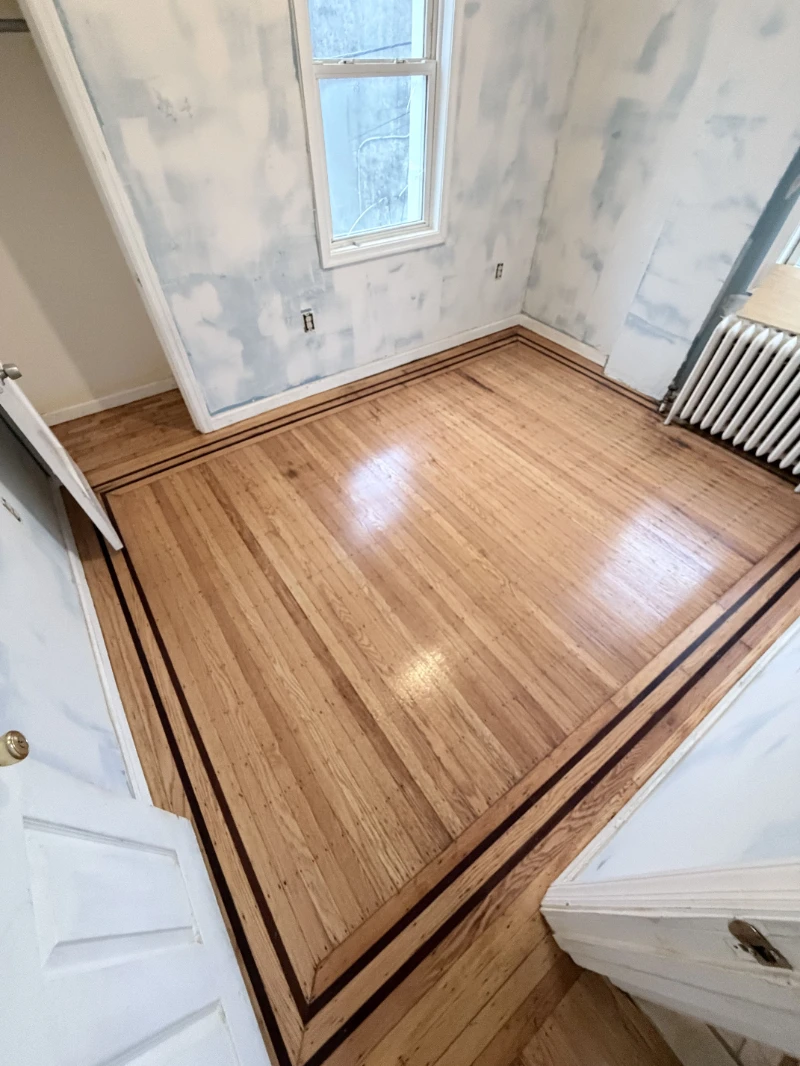
Solid wood often recovers substantially. Engineered flooring that has delaminated does not, and neither does laminate whose core has swelled.
Solid wood is a single piece of material — it moves and can come back. Engineered flooring is layers bonded together, and once that bond fails the board is finished.
This is worth knowing before a whole floor is condemned. Solid wood that looks alarming in week one frequently ends as a partial repair plus refinishing.
Documentation for insurance
Photograph conditions, record moisture readings and keep dates from the beginning, because claims are decided on evidence gathered early.
We provide written readings and documentation of what we find. What we will not do is state that a floor is unsalvageable before it has dried enough to know.
How VGJ Floors handles a water-damaged wood floor
Confirm the source is stopped
There is no point drying an assembly that is still taking on water.
Measure and document
Record moisture readings across the floor and the subfloor, with photographs and dates for the insurance file.
Dry the assembly
Dry the subfloor and cavity, not only the visible surface, and monitor readings over time.
Wait for equalization
Allow the boards to flatten as moisture equalizes before deciding what actually needs replacing.
Replace what did not recover
Weave in replacement boards where damage is permanent.
Refinish to blend
Sand and refinish the affected area so repairs and original floor read as one surface.
Frequently asked questions
My wood floor got wet and is cupping. Is it ruined?
Often not. Solid wood cupping from a single event frequently flattens substantially as the assembly dries. The critical thing is not to sand it while it is still cupped.
How long should a wet floor dry before it is sanded?
Until moisture readings show the flooring and subfloor have equalized. It is measured, not scheduled, and rushing it produces crowning.
Will my insurance cover wood floor water damage?
That depends on your policy and the cause. What helps every claim is early documentation: photographs, moisture readings and dates.
Can engineered flooring survive water damage?
Less often than solid. Once the layers delaminate the board cannot recover, whereas solid wood can move and come back.
Should I rent fans and dry it myself?
Air movement helps, but drying the cavity beneath the floor is the part that matters and is easy to miss. Readings are what tell you whether it is working.
Get this quoted properly
We take moisture readings and check wear layer before putting a number on the job — so the quote matches what your floor can support.
Request a free estimate