
Hardwood Floor Installation
Installing solid hardwood is mostly a moisture problem wearing a carpentry disguise.
- 5.0★★★★★85 Google reviews
- Since 2008
- 185 New Jersey towns
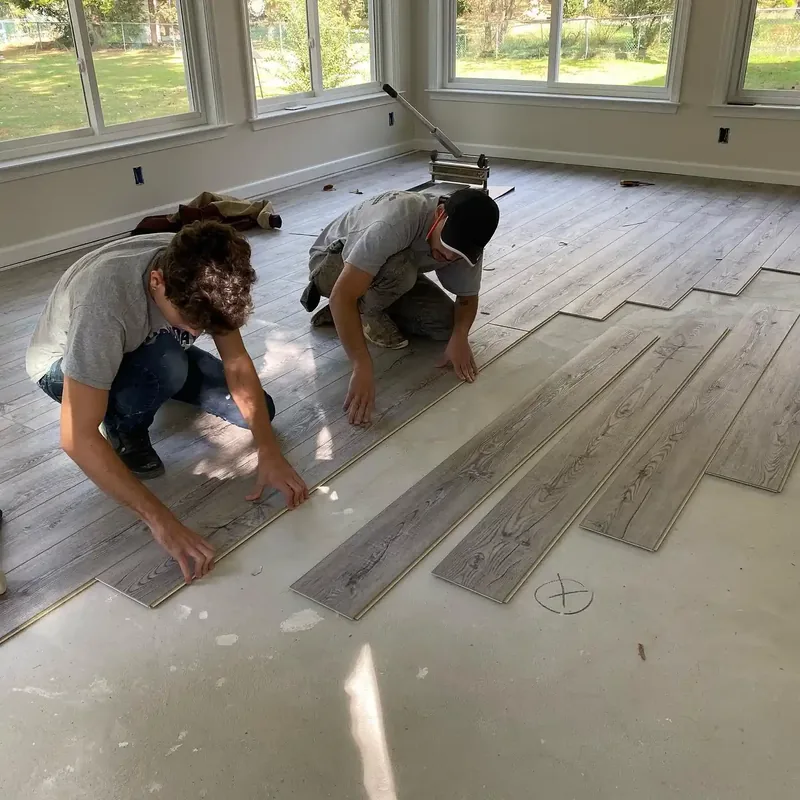
The boards, the subfloor and the room all have to be in equilibrium before the first fastener goes in, because whatever difference exists at installation will express itself later as cupping or gaps.
Key facts
| Subfloor-to-flooring moisture | No more than 4% difference for solid strip |
|---|---|
| Jobsite conditions | 60–80 °F and 30–50% relative humidity |
| Conditions held | At least 5 days before delivery |
| Moisture readings | Minimum 20 per 1,000 sq ft, averaged |
| Governed by | NWFA Wood Flooring Installation Guidelines |
Acclimation is a condition, not a waiting period
Flooring is ready when its moisture content is in equilibrium with the conditioned space — not when a fixed number of days has passed.
Stacking material in an unheated house for a week is not acclimation. If the space is not being held at the reference temperature and humidity, the flooring is equilibrating to conditions that will not exist once the house is lived in.
This matters especially in New Jersey shoulder seasons, when a house may be neither heated nor cooled and interior humidity drifts well outside the range.
The subfloor decides more than the species does
Subfloor type, condition and moisture determine which installation methods are available and whether solid wood is appropriate at all.
Plywood over a conditioned basement is the straightforward case. A subfloor over an unvented crawlspace, or a below-grade slab, changes the calculation and may point to engineered flooring or to a different product entirely.
Flatness matters as well. Fastening solid wood over an uneven subfloor produces hollow spots and movement noise that no amount of finishing will fix.
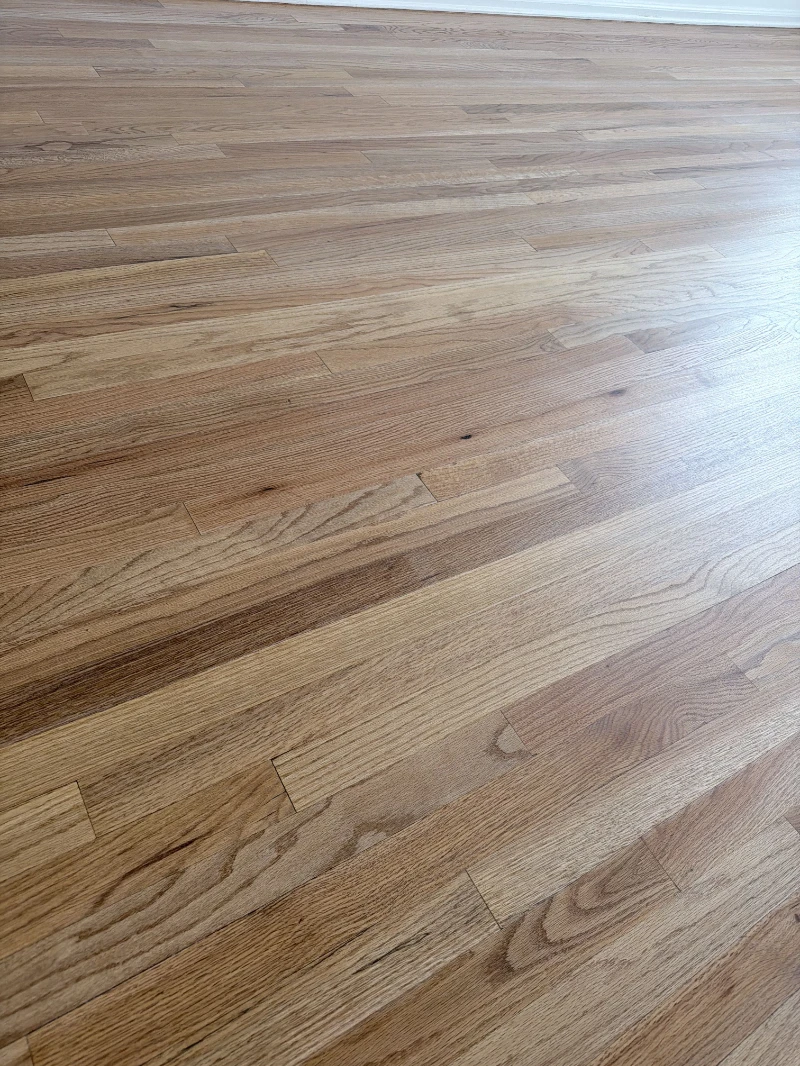
Expansion space is not optional
Solid wood expands and contracts across its width with the seasons, and the installation has to leave room for it at the perimeter.
Perimeter gaps are covered by base and shoe molding, so they are invisible when the job is done — and their absence is invisible too, until a humid summer pushes the floor against the walls and it buckles.
What we do before quoting
We take moisture readings of the subfloor and the space before putting a number on the job.
A quote produced without readings is a quote based on an assumption about the single variable most likely to cause the floor to fail. If readings show the assembly is not ready, the honest answer is to say so before the material is ordered.
How VGJ Floors installs a solid hardwood floor
Measure moisture and conditions
Take subfloor and ambient readings — at least 20 per 1,000 sq ft — and confirm the space is within the reference range.
Prepare the subfloor
Check flatness and fastening, correct deflection and squeaks, and address any moisture source before proceeding.
Acclimate the material
Deliver flooring into the conditioned space and hold it until its moisture content is in equilibrium and within 4% of the subfloor.
Lay out the floor
Set direction, starting line and racking pattern so the layout works with the room rather than against it.
Install with expansion space
Fasten according to the material and subfloor, maintaining perimeter expansion space throughout.
Trim and transitions
Fit base, shoe and thresholds, and detail transitions to adjoining surfaces.
Frequently asked questions
How long does flooring need to acclimate?
It is not a fixed number of days. The material is ready when its moisture content is in equilibrium with a space held at 60–80 °F and 30–50% relative humidity, and within 4% of the subfloor.
Can solid hardwood go in a basement?
Generally not below grade. Moisture conditions in a basement usually point toward engineered flooring or luxury vinyl plank, and the slab should be tested either way.
Do you have to remove the old floor first?
Usually. Installing over an existing floor changes height at doorways and transitions and can trap problems underneath.
What causes gaps between boards in winter?
Solid wood loses moisture during heating season and shrinks slightly across its width. Fine seasonal gaps are normal; gaps that stay open through summer are not.
What decides the cost of an installation?
Species and grade of material, subfloor preparation, room complexity, stairs and transitions, and whether the floor is site-finished or prefinished.
Prefinished or site-finished?
Prefinished is faster and has a factory-applied finish with beveled edges. Site-finished gives a continuous flat surface and custom colour, at the cost of more days on site.
Get this quoted properly
We take moisture readings and check wear layer before putting a number on the job — so the quote matches what your floor can support.
Request a free estimate