
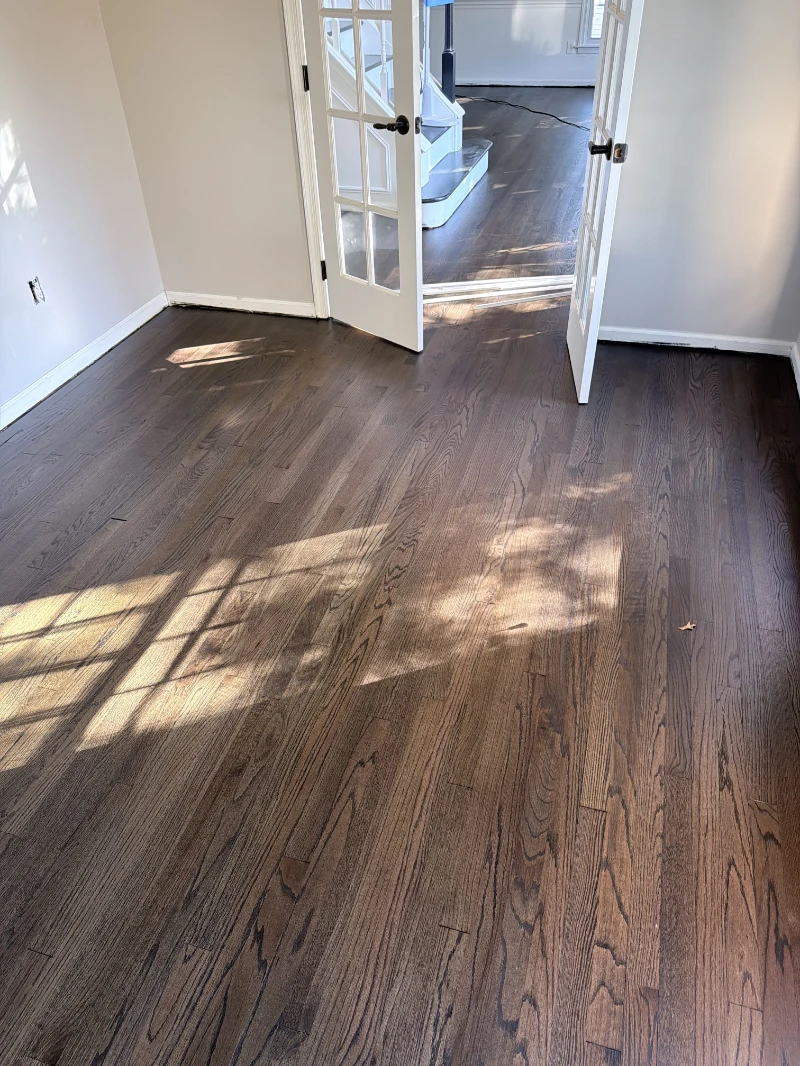
Refinishing & Sanding
Hardwood Floor Refinishing in New Jersey
Refinishing sands a wood floor back to bare wood and rebuilds the finish on top.
Stairs and commercial floors are the same material as a living room floor with entirely different constraints.
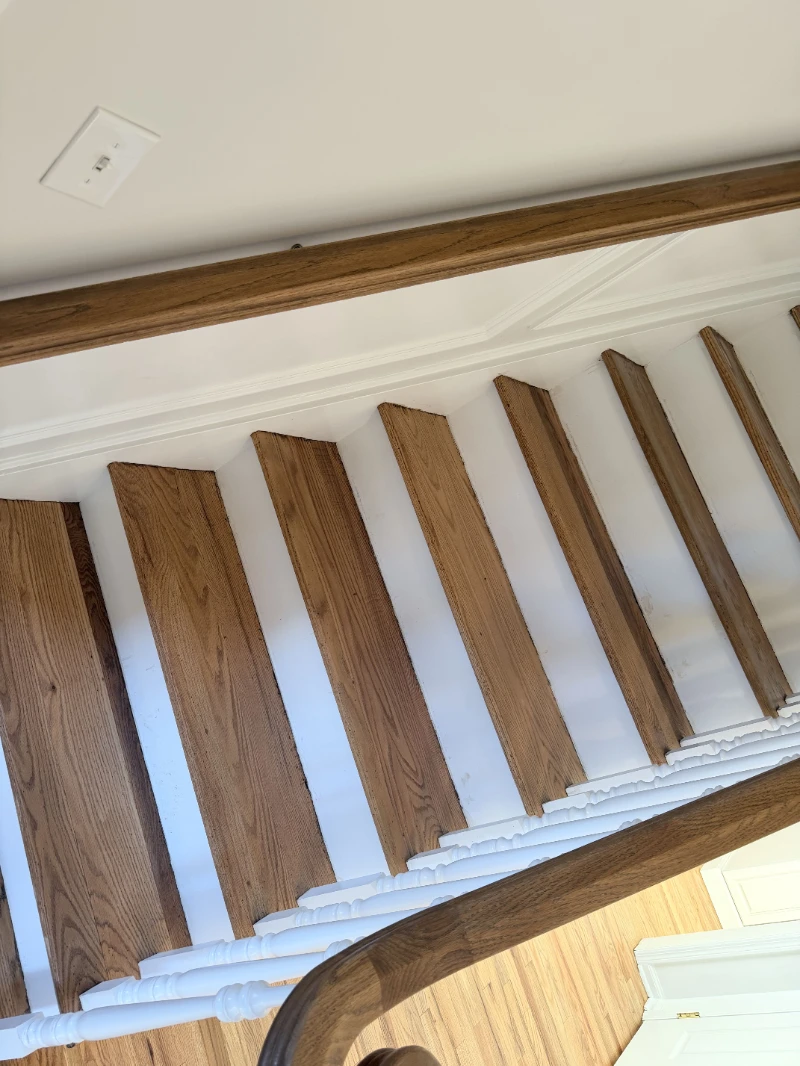
A staircase is almost all edge work done by hand, on a surface the household cannot stop using. A gymnasium floor has to reopen on a fixed date, with game lines reproduced correctly inside the coating sequence.
A staircase inverts the ratio of field to edge — almost every surface is a corner, a nosing or a detail worked by hand.
A floor is mostly open area a machine covers quickly, with perimeter work at the edges. On a staircase there is no open area at all.
Balusters that cannot be removed turn each tread into hand work around obstructions, and that is before the risers.
Work is staged in sections or on alternating treads so there is always a usable route, which extends the schedule.
Finish cure schedules have to account for traffic that cannot be avoided. This is the practical reason a staircase takes longer than its square footage suggests.
In pre-1978 housing, risers, stringers and balusters are frequently the largest area of painted surface disturbed in a flooring project.
This is a question to settle before work starts, not during it. Given that roughly 65% of homes in our service area predate 1978, it comes up constantly.
On a gymnasium or a studio, the return-to-service date is fixed first and the finish system is chosen to fit inside it.
A finish that needs more cure days than the closure allows is the wrong finish, however well it performs.
Game lines sit within the coating build — over sealed wood, under the final coats. Getting that order wrong means redoing the floor, not touching up the lines.
Treads can usually be replaced individually without rebuilding the staircase, though matching an existing profile and nosing takes care.
Risers are simpler and are often painted rather than finished, which is precisely why they carry the lead question in older houses.
Where a carpet is coming off a staircase, what is underneath is frequently construction-grade material never meant to be seen. That is a replacement conversation, not a refinishing one, and it is better to find out before the carpet comes up.
Stairs concentrate wear in a narrow path and the nosing takes the worst of it, so a very high-gloss finish there is a decision worth making deliberately.
Gloss level affects perceived slipperiness and shows wear faster on a tread than on a flat floor. Matte and satin hide the traffic path better and are the more common choice on stairs even when the adjoining floor is glossier.
Yes, with staging. Work is done in sections or on alternating treads so there is always a usable route.
On most stairs they cannot be, so the work is done around them by hand.
It depends on the finish system and coat schedule. The date is set first and the specification chosen to fit.
Dry means the surface takes light foot traffic. Cured means the finish has reached full hardness and chemical resistance. Equipment and rolling loads need cure.
Send photos and the town you are in. We will tell you which of this actually applies to your house.
Request a free estimateRefinishing & Sanding
Refinishing sands a wood floor back to bare wood and rebuilds the finish on top.
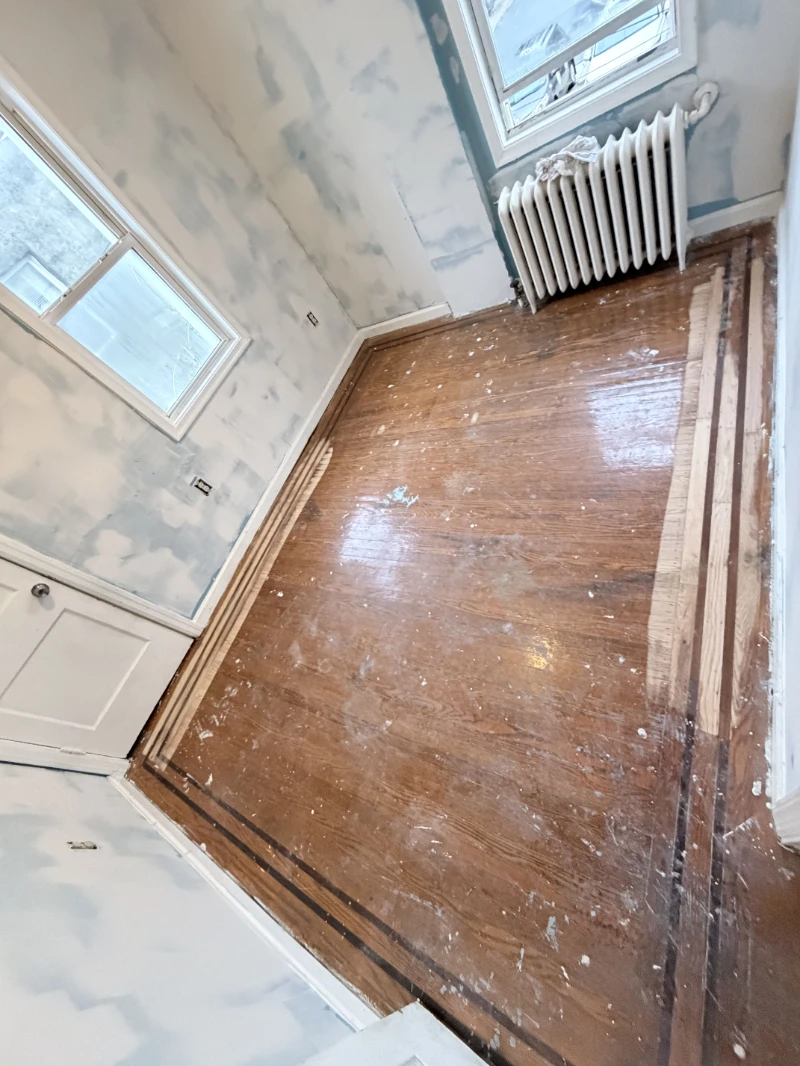
Refinishing & Sanding
Most articles about refinishing are written to sell refinishing.
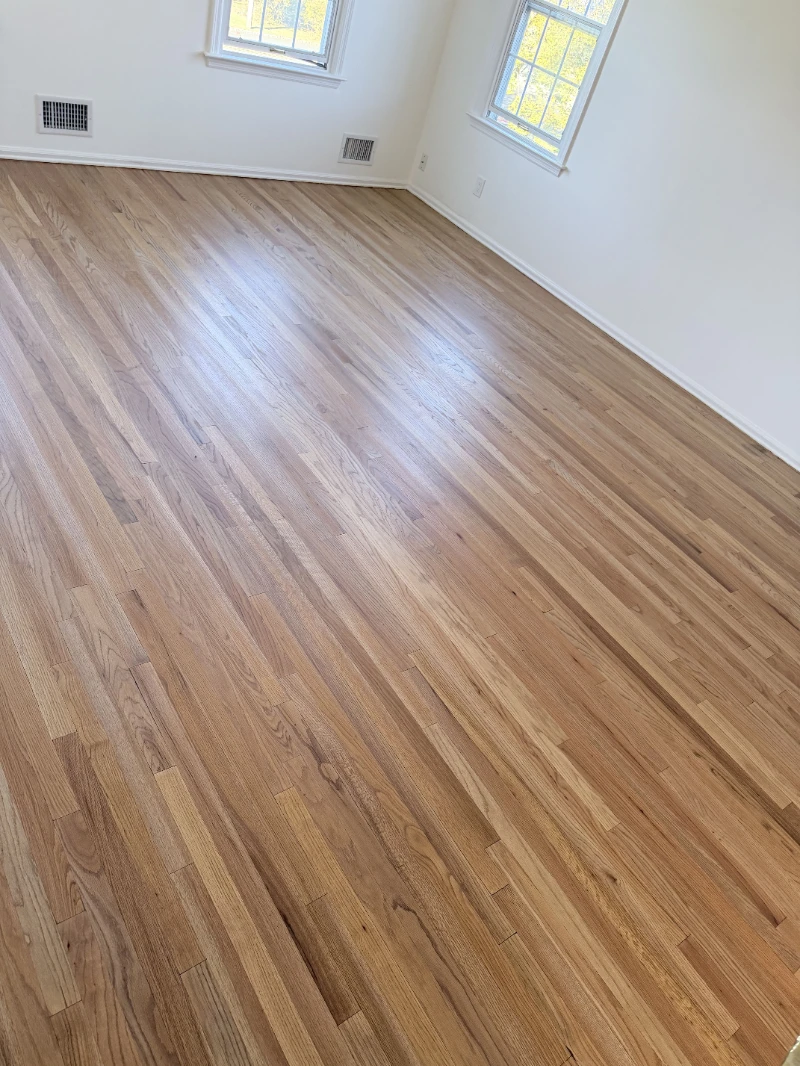
Installation
Installing a wood floor is mostly a moisture problem wearing a carpentry disguise.