

Installation
How to Vet a Wood Floor Contractor in New Jersey
Most of what separates a competent flooring contractor from an expensive mistake is checkable before anyone sets foot in your…
Installing a wood floor is mostly a moisture problem wearing a carpentry disguise.
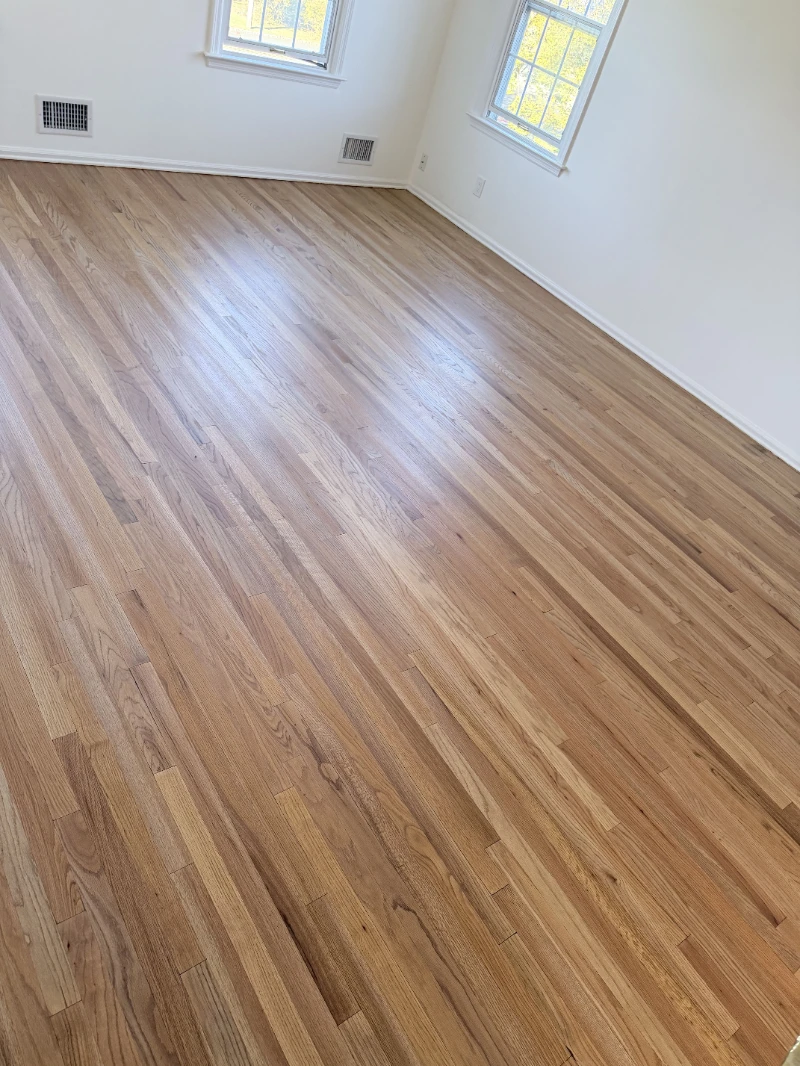
The boards, the subfloor and the room all have to be near equilibrium before the first fastener goes in, because whatever difference exists on installation day will express itself later as cupping or as gaps that do not close in summer.
Subfloor type, condition and moisture determine which materials and methods are available, and whether solid wood is appropriate at all.
Plywood over a conditioned basement is the straightforward case and supports solid hardwood. A below-grade slab is not, and usually points toward engineered flooring or luxury vinyl plank.
Flatness matters as much as moisture. Fastening solid wood over an uneven subfloor produces hollow spots and movement noise that no amount of finishing will fix afterwards.
Material is ready when its moisture content is in equilibrium with a conditioned space — not when a fixed number of days has passed.
Stacking boxes in an unheated house for a week is not acclimation. If the space is not held at the reference temperature and humidity, the flooring equilibrates to conditions that will not exist once the house is lived in.
This matters especially in New Jersey shoulder seasons, when a house may be neither heated nor cooled and interior humidity drifts well outside the range.
Use in-situ relative humidity probes under ASTM F2170, or anhydrous calcium chloride under ASTM F1869 — a surface feel test tells you nothing.
A slab dries from the top down. The surface can read acceptably while the body still holds enough moisture to drive vapor upward for months after flooring goes down.
Where a manufacturer's warranty names a specific method, that is the method that has to be run. Substituting a faster one is how claims get denied.
Solid wood is restorable and moves with humidity; engineered is more stable but limited by veneer thickness; LVP is waterproof and not restorable at all.
On a main floor with a sound subfloor and no moisture issue, solid wood remains the material that can be brought back rather than replaced, which is why it holds value over decades.
In a finished basement, recommending solid wood is setting up a callback. We will say so.
Prefinished is faster and arrives with a factory finish and beveled edges; site-finished gives a continuous flat surface and custom colour, at the cost of more days on site.
On an occupied house with a fixed move-in date, prefinished often wins on schedule alone. Where the floor has to match adjoining rooms or run seamlessly through an open plan, site-finished is the one that can do it.
Red oak dominates, white oak is the current preference for light and neutral finishes, and heart pine appears mostly as original material in pre-1940 housing.
Red oak is open-pored, takes stain evenly and carries a warm undertone that pushes back against cool greys. It is what most postwar New Jersey housing already has, which matters when a new floor has to meet an old one.
White oak is denser, less porous and more neutral, which is why it dominates current light-finish and reactive-stain work.
Species choice also sets hardness expectations. The Janka test compares resistance to indentation, and it is a useful way to set expectations for a household with large dogs or heavy furniture.
The subfloor and the product decide the method, and the manufacturer's instructions govern which are permitted without voiding the warranty.
Nail-down is standard for solid strip over a wood subfloor and gives the most solid feel underfoot.
Glue-down is common over concrete and depends on a clean, flat, dry slab and on adhesive compatibility with the moisture readings.
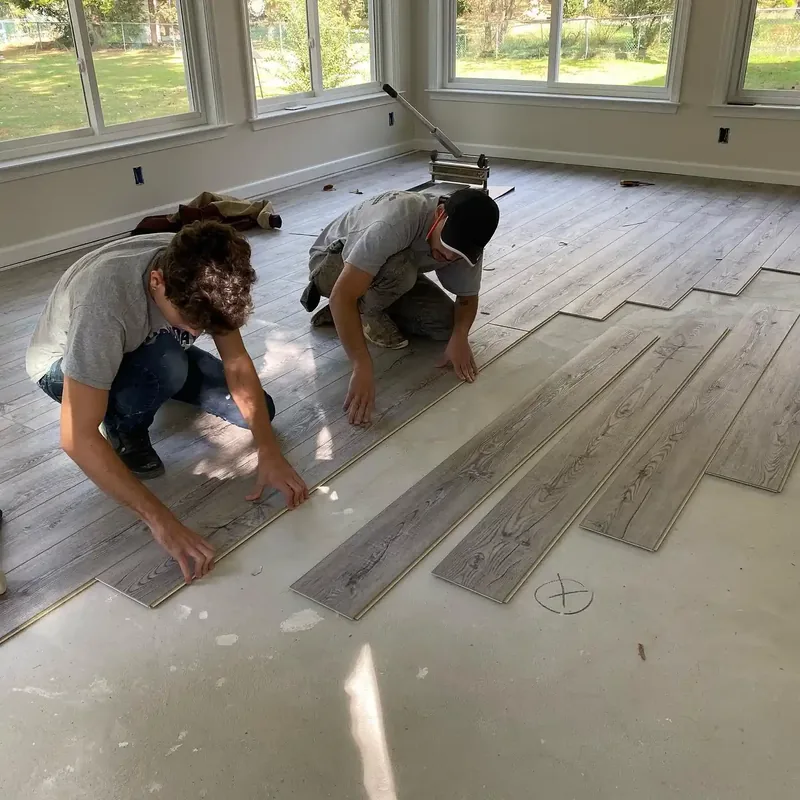
Floating is fastest and tolerates minor subfloor variation, but it sounds different underfoot and needs continuous perimeter expansion space at every wall, column, jamb and pipe penetration. A floating floor pinned at any point will peak at the seams.
Installation is usually the short part; acclimation before it and finish cure after it are what set the calendar.
A site-finished floor is not finished when the last board goes down. Sanding, staining and coats follow, each with its own dry time.
Planning a move-in date around the day installation ends is the most common scheduling mistake we see, and it is the one that pushes people to walk on finish before it has cured.
It is not a fixed number of days. The material is ready when its moisture content is in equilibrium with a space held at 60–80 °F and 30–50% RH, and within 4% of the subfloor.
Generally not below grade. Moisture conditions there usually point toward engineered flooring or luxury vinyl plank, and the slab should be tested either way.
Solid wood loses moisture during heating season and shrinks slightly across its width. Fine seasonal gaps are normal; gaps that stay open through summer are not.
Usually. Installing over an existing floor changes height at doorways and can trap problems underneath.
Send photos and the town you are in. We will tell you which of this actually applies to your house.
Request a free estimateInstallation
Most of what separates a competent flooring contractor from an expensive mistake is checkable before anyone sets foot in your…
Installation
The choice between solid and engineered flooring is decided by what is under the floor, not by what the room is used for.
Installation
Species is usually presented as a hardness ranking, which is the least useful way to choose one.