
Installation
Wood Floor Installation in New Jersey
Installing a wood floor is mostly a moisture problem wearing a carpentry disguise.
Species is usually presented as a hardness ranking, which is the least useful way to choose one.
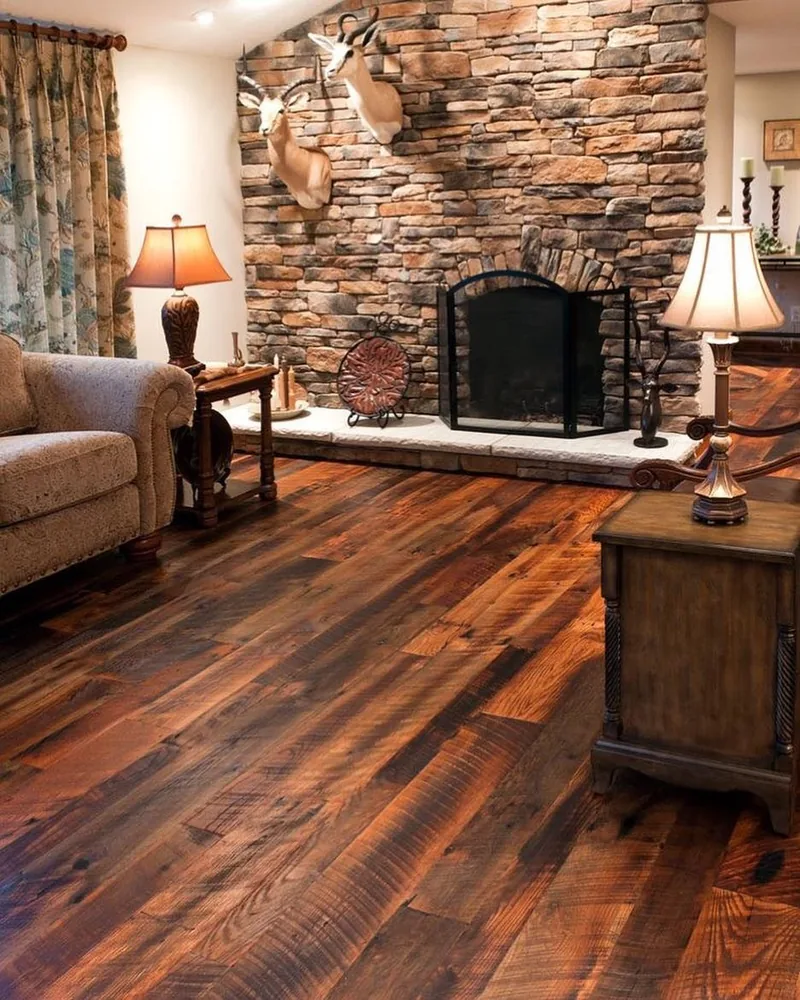
What actually separates the common options is grain structure and how each takes stain, because that decides whether the floor you get is the colour you picked. In much of the New Jersey housing stock the decision is also partly made for you, because there is already red oak strip on the other side of the doorway.
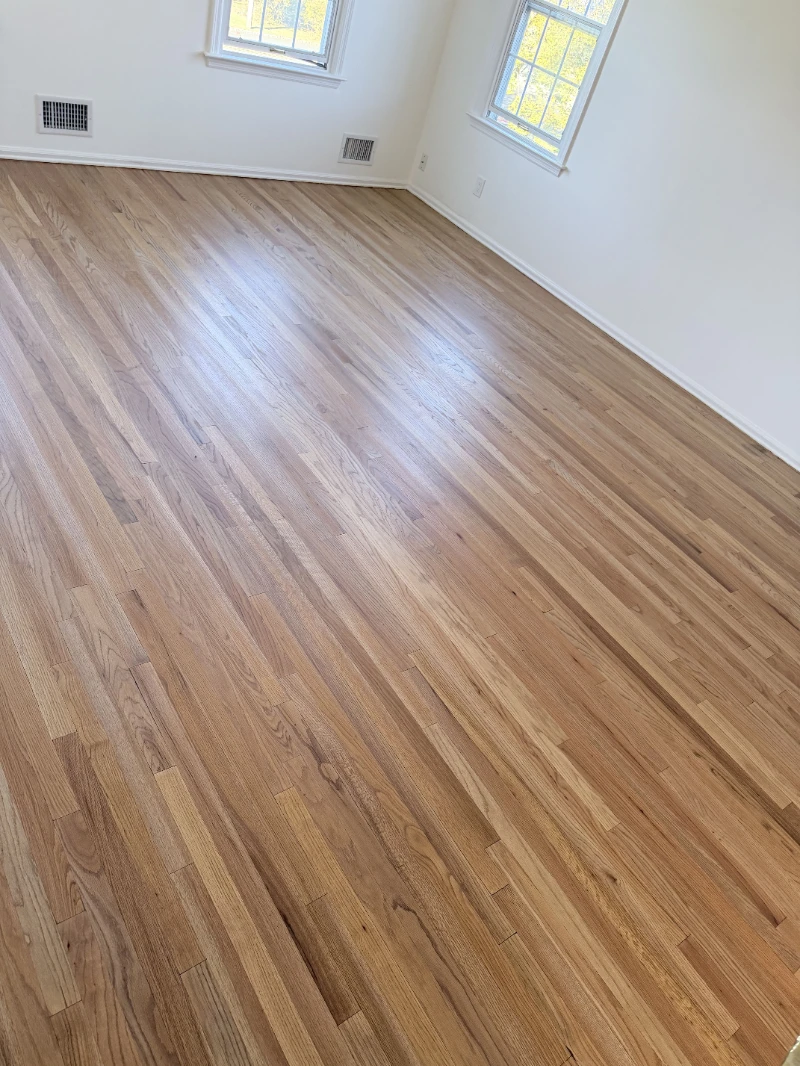
If your house has original wood floors, they are very likely red oak strip, and any new wood that meets them has to answer to that.
Red oak strip is what went into the housing built through the middle of the last century across this part of the state, and it is what we find under carpet more often than everything else combined. That matters when the job is an addition, a renovated room, or a floor being extended into what used to be a porch.
Extending in a different species is possible and sometimes right, but it needs a deliberate break: a threshold, a change of direction, a doorway. What does not work is running a different species into the same plane and hoping stain will hide it. It will not, because grain does not stain away.
Red oak is open-grained with a pink undertone; white oak has tighter, closed pores and a browner cast. That difference decides which colours each will accept.
White oak's pores are largely blocked by tyloses, which is why the same species is used for wine and whiskey barrels. On a floor that shows up as a tighter, calmer grain that takes a light or cool finish without the pink coming through.
Red oak has open pores and a warmer base. Under a natural or amber finish it looks the way most people picture a hardwood floor. Under a grey or a white-washed finish it tends to argue, and the pink surfaces in the pores.
This is the single most common disappointment in a refinishing job that involved a colour change. The stain was mixed correctly and the floor still came out warmer than the sample, because the sample was white oak and the house is red oak.
Janka hardness measures resistance to indentation, which is a real property and a poor proxy for how a floor will look in five years.
For reference among the common domestic species: black walnut sits around 1010, red oak 1290, white oak 1360, hard maple 1450 and hickory 1820.
The reason this matters less than it appears is that most visible damage on a floor is not indentation. It is fine scratching from grit tracked in on shoes, and grit scratches finish rather than wood. The finish specification and a doormat do more for a floor's appearance than 400 points of Janka.
Where hardness does earn its keep is in genuinely heavy-impact settings, and in households where large dogs run on the floor daily. There, hickory's number is doing real work.
Hard maple is denser than oak but has a closed, fine grain that absorbs stain unevenly, so it blotches unless the finisher works around it.
The material is not at fault. Applying pigment stain directly to maple the way you would to oak produces a cloudy, patchy result, and the fix is technique: a conditioner, a dye rather than a pigment, or accepting the wood's natural colour under a clear finish.
Maple under a waterborne clear finish is a genuinely beautiful, bright, contemporary floor. Maple stained dark by someone treating it as oak is a floor you will look at every day and not like.
If a contractor proposes staining maple dark without mentioning any of this, that is worth a follow-up question.
Walnut is soft and dark with low colour variation; hickory is the hardest common option with the highest variation. Neither is neutral, and both commit the room.
Black walnut gives a deep brown floor without stain, which is why it holds its colour more predictably than stained oak does. It is also comparatively soft, so it shows dents sooner.
Hickory swings from near-white sapwood to mid-brown heartwood board to board. In a large open room that reads as texture and life. In a small room it can read as busy, and it is not something a finish will calm down.
Both are decisions about the room's character rather than its durability, and both are hard to reverse without replacing the floor.
Sample on your own floor, in your own light, with the finish you are actually going to use. Nothing else predicts the result reliably.
A stain sample made on the sanded floor in the room it is going in, viewed in daylight and again at night under the lamps you own, removes almost all of the risk from this decision. A sample board from a showroom removes none of it, because it is a different species batch under different light with a different finish over it.
Ask for at least three samples side by side and live with them for a day. It is the cheapest step in the entire job and it prevents the most expensive regret.
Red oak strip, by a wide margin, particularly in housing built through the middle of the last century. It is the species most often found under carpet during renovation work here.
Red oak is open-grained with a pink undertone. White oak has tighter, largely closed pores and a browner cast. White oak takes cool, grey and light finishes cleanly; red oak tends to push warm and let the pink show through the pores.
By Janka hardness, hickory at roughly 1820 leads the common domestic species, ahead of hard maple at 1450, white oak at 1360 and red oak at 1290. In practice most visible wear is fine scratching from grit, which the finish resists rather than the wood.
They can, but not with the technique used on oak. Maple's closed grain absorbs pigment stain unevenly and blotches. A conditioner, a dye stain, or a clear finish over the natural wood are the ways around it.
Yes, if there is a deliberate break such as a threshold, a doorway or a change of direction. Running a different species into the same plane as an existing floor does not blend, because stain does not hide a grain difference.
Sample on your own sanded floor, in the room it is going in, with the finish you will actually use, and look at it in daylight and under your own lamps at night. Showroom boards are a different batch, light and finish, and they mislead.
Send photos and the town you are in. We will tell you which of this actually applies to your house.
Request a free estimateInstallation
Installing a wood floor is mostly a moisture problem wearing a carpentry disguise.
Installation
Most of what separates a competent flooring contractor from an expensive mistake is checkable before anyone sets foot in your…
Installation
The choice between solid and engineered flooring is decided by what is under the floor, not by what the room is used for.