
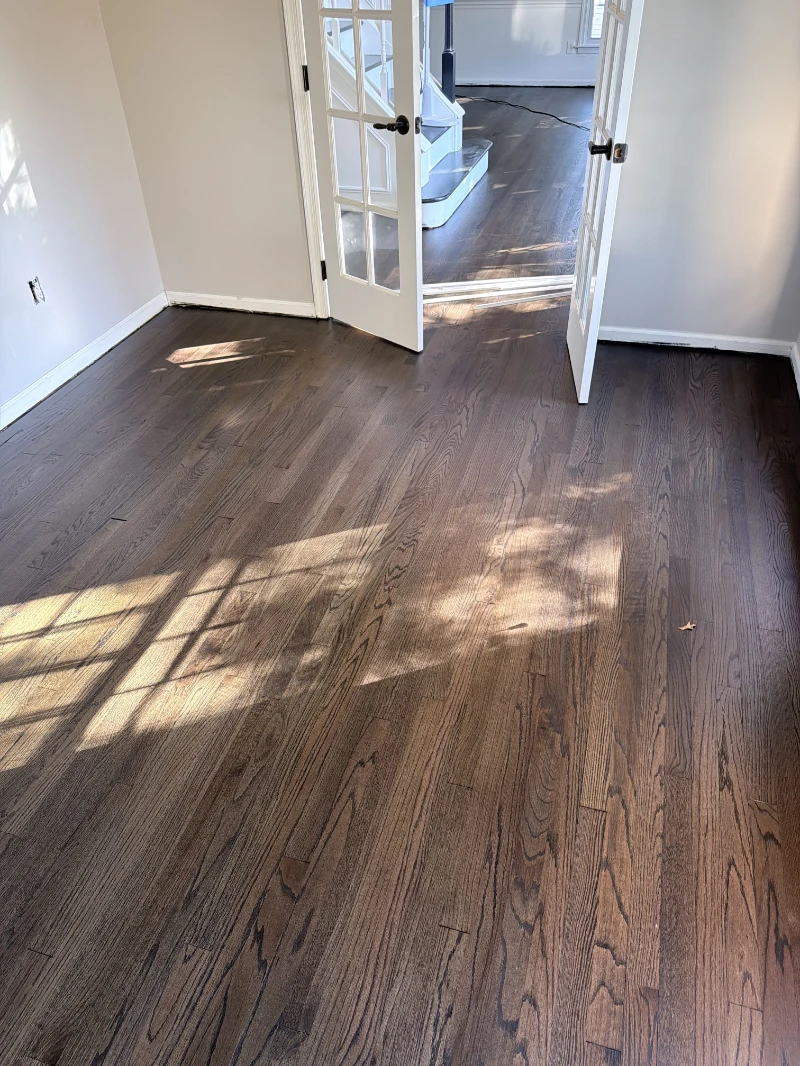
Refinishing & Sanding
Hardwood Floor Refinishing in New Jersey
Refinishing sands a wood floor back to bare wood and rebuilds the finish on top.
Most articles about refinishing are written to sell refinishing.
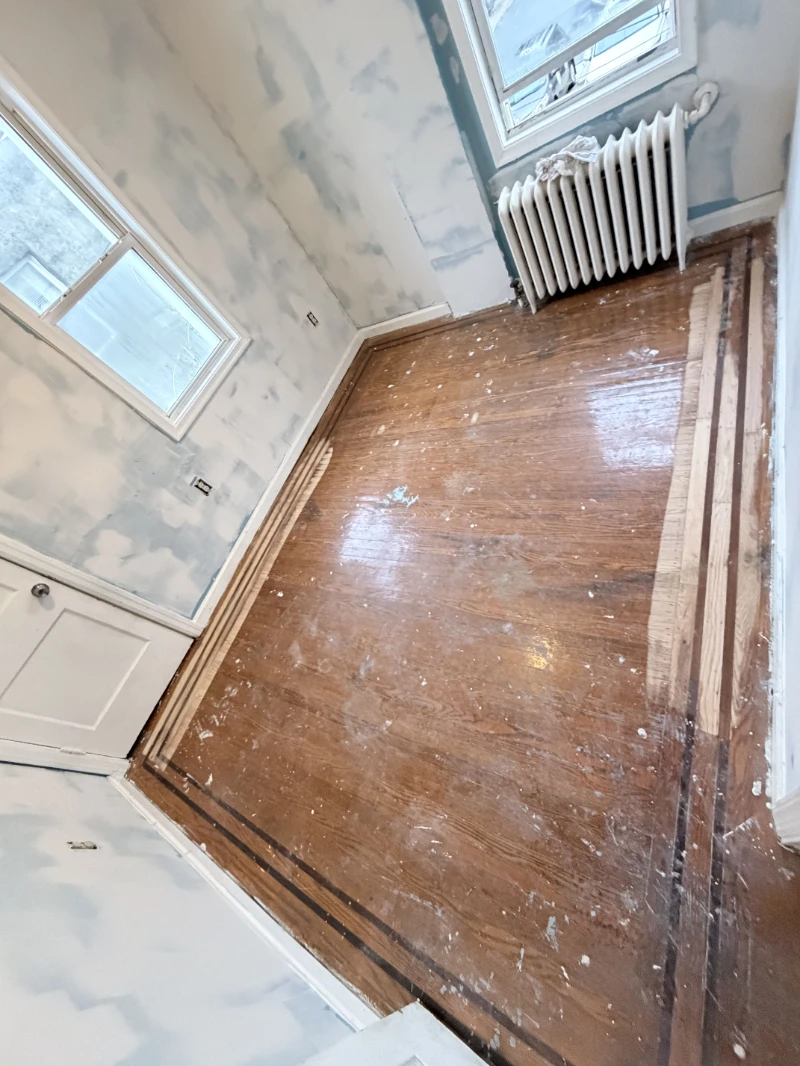
This one lists the five situations where sanding your floor is the wrong decision — and where a contractor who agrees to do it anyway is taking your money for a result that cannot be delivered.
If the wood above the tongue is gone, sanding will expose the fastener heads and the tongue itself, and the floor is finished.
This is common in pre-1940 housing that has already been refinished two or three times across a century. It is measurable in a minute at any floor vent or threshold.
A contractor who quotes without looking at an exposed edge has not checked the one thing that decides whether the job is possible.
Cupping is a moisture symptom, and sanding it flat before the cause is fixed produces a crowned floor once the boards dry.
The moisture is coming from somewhere: a damp crawlspace, a slab without a vapor retarder, a slow leak, a dishwasher that has been weeping for a year.
Sanding treats the shape and ignores the cause. Six weeks later the boards flatten, the centres stand proud, and the fix is another sanding on a floor with less wood than before.
Some engineered products have a wear veneer too thin to sand at all, and it is not visible from the surface.
The product's specification says so, but by the time a homeowner is asking about refinishing, the specification is usually long gone.
An exposed edge at a threshold shows the layer structure. If the hardwood layer is a fraction of a millimetre, the honest answer is that the floor is a replacement candidate, not a refinishing one.
If the finish is dull and lightly scuffed but has not worn through to the wood, a screen and recoat gives you the same result without consuming any wear layer.
Test it: a drop of water left for a few minutes on a dull area. Beads means the finish is intact. Darkens means it is gone there.
A full refinish in this situation spends a sanding you will want later. It is the most expensive way to buy a result you could have had for less.
Finish cure schedules are set by chemistry, not by your closing date, and rushing them is how a new floor gets marked before anyone moves in.
A floor that takes light foot traffic is not cured. Furniture, rugs and appliance dollies need full cure, which is measured in days after the last coat.
If the calendar does not allow it, the honest options are to move the date or to do a recoat instead.
When there is wear layer to work with, no unresolved moisture, damage that has reached the wood, and enough time in the schedule for the finish to cure.
That describes a great many New Jersey floors — which is why we do this work. But it does not describe all of them, and the difference is checkable before anyone signs anything.
Lift a floor vent or look at a threshold where the board edge is exposed. What matters is the wood above the tongue of the joint.
Find the moisture source before anything else — crawlspace, slab, appliance leak or plumbing. Then let the floor dry and equalise, verified with readings, before any sanding is scheduled.
Often yes. A screen and recoat abrades only the finish, not the veneer, so it works where sanding does not.
A good one will. Ask directly what they found at the exposed board edge and what their moisture readings were — the answers reveal whether they looked.
Send photos and the town you are in. We will tell you which of this actually applies to your house.
Request a free estimateRefinishing & Sanding
Refinishing sands a wood floor back to bare wood and rebuilds the finish on top.
Refinishing & Sanding
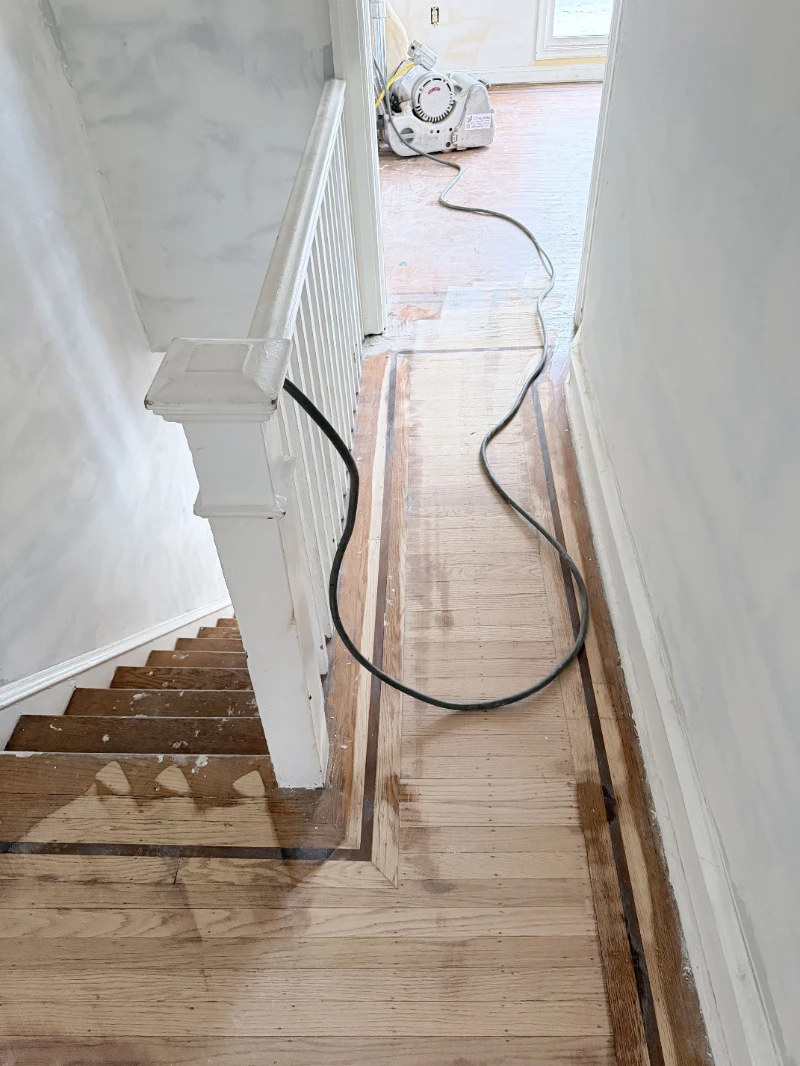
Dustless sanding runs the equipment through a vacuum and containment system, usually HEPA-filtered, so most dust is captured…
Refinishing & Sanding
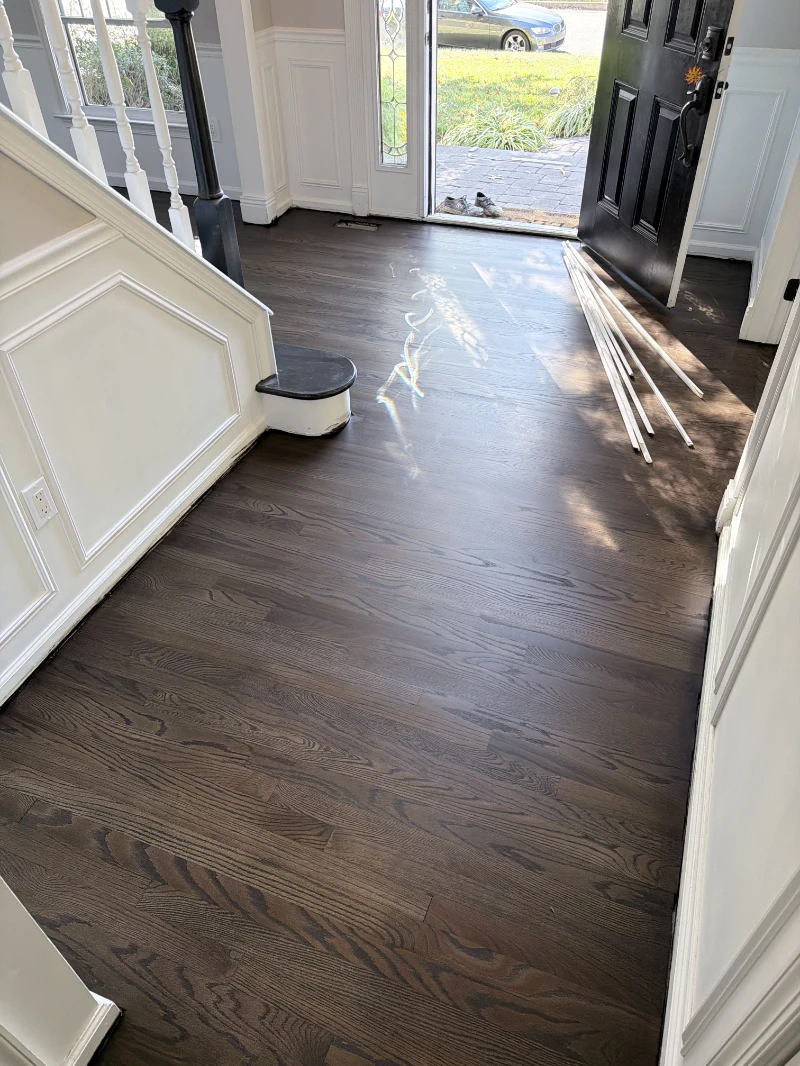
The choice between oil-modified and waterborne polyurethane comes down to three things: colour, odour and schedule.