
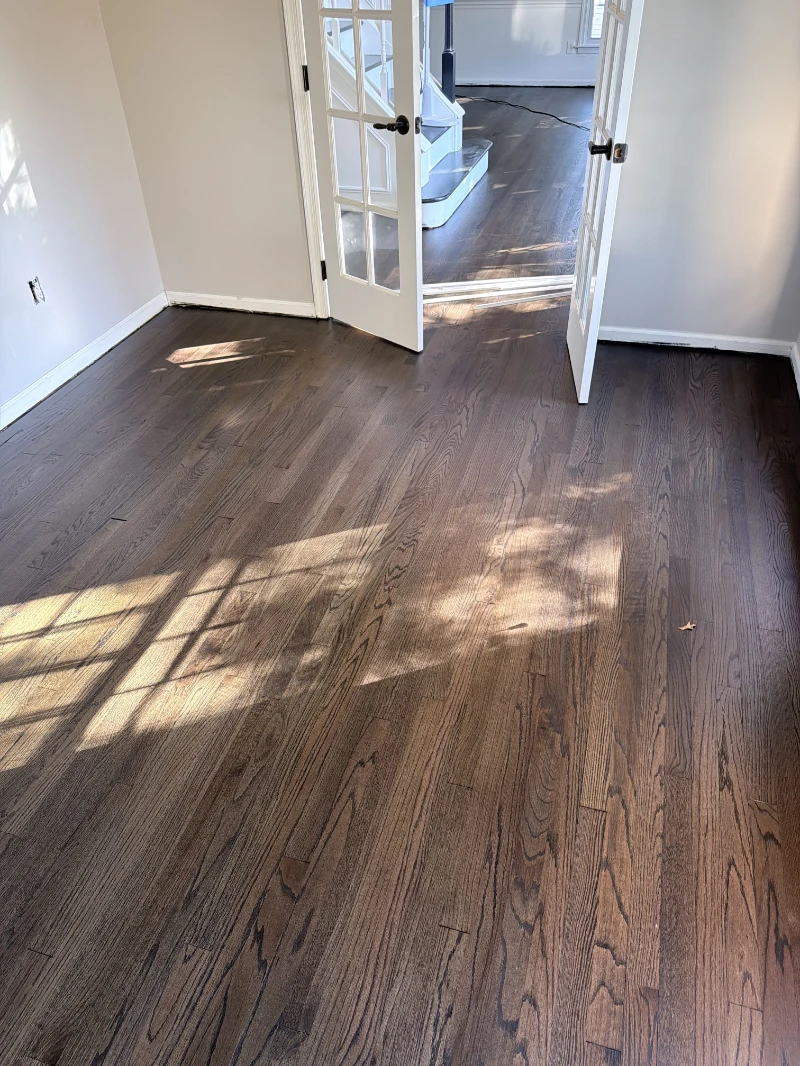
Refinishing & Sanding
Hardwood Floor Refinishing in New Jersey
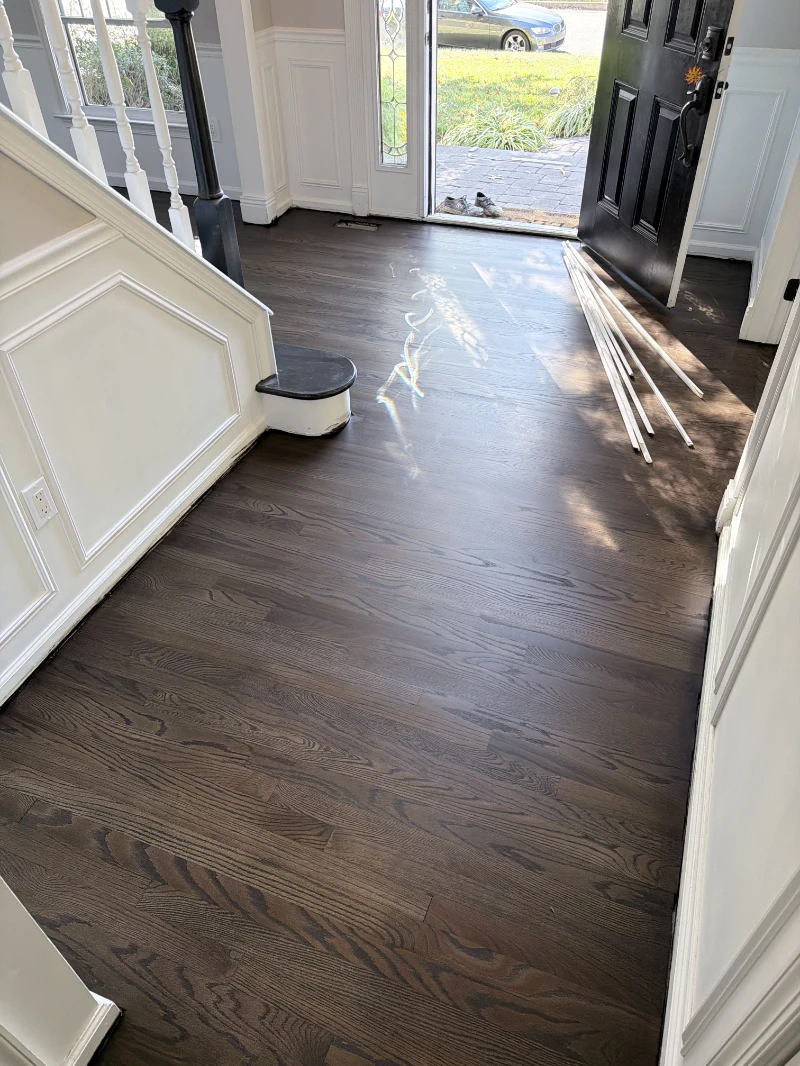
Refinishing sands a wood floor back to bare wood and rebuilds the finish on top.
The choice between oil-modified and waterborne polyurethane comes down to three things: colour, odour and schedule.
Oil-modified ambers the wood and keeps ambering with age. Waterborne holds the colour where it is. Everything else in the comparison is secondary to those two facts.
Oil-modified pushes red oak warmer and more orange over the years; waterborne keeps the floor looking as it did on the day it was finished.
This is the one that catches people. A homeowner chooses a cool grey or a light natural tone, and then the floor is finished with an ambering product. The stain was right — the finish moved it.
Neither is wrong. But amber is not reversible without sanding, so it should be a decision rather than an inheritance from whatever is on the truck.
Solvent-based finishes carry strong odour through application and cure; waterborne is markedly lower and lets a household return sooner.
For an occupied house — particularly with children, pets, or anyone with respiratory sensitivity — this is often the deciding factor regardless of colour preference.
Bona Traffic HD, a common two-component waterborne product, publishes a VOC content of 150 g/L with hardener. Solvent-based oil-modified products sit far above that.
A quality two-component waterborne finish is competitive with or better than oil-modified on abrasion resistance — the category does not decide it, the specific product does.
The hardener is what produces the abrasion and chemical resistance in a two-component system. Without it, the same base performs like a single-component finish, which is why mixing matters as much as choosing.
It is a third category, not a variant: it bonds into the top wood fibres instead of forming a film, which allows invisible spot repair at the cost of film hardness.
Rubio Monocoat Oil Plus 2C publishes 0% VOC and a 100% solids formulation, and colours and protects in a single layer. The trade-off is real: a non-film-forming finish does not deliver the abrasion protection of a catalysed film.
Choose it if you want a matte, close-to-the-wood look and easy future touch-ups. Choose a film if you want maximum scratch resistance and accept that repairs are done by the room.
A quality two-component waterborne finish is competitive with or better than oil-modified on abrasion. Longevity depends more on the specific product and the application than on the category.
It keeps the wood's natural colour rather than adding amber. Warmth can be achieved with stain under the finish instead.
Solvent odour persists through application and into the cure period, measured in days rather than hours.
Yes, and worn areas can be cleaned and re-oiled in place and blended, which is its main practical advantage.
Send photos and the town you are in. We will tell you which of this actually applies to your house.
Request a free estimateRefinishing & Sanding
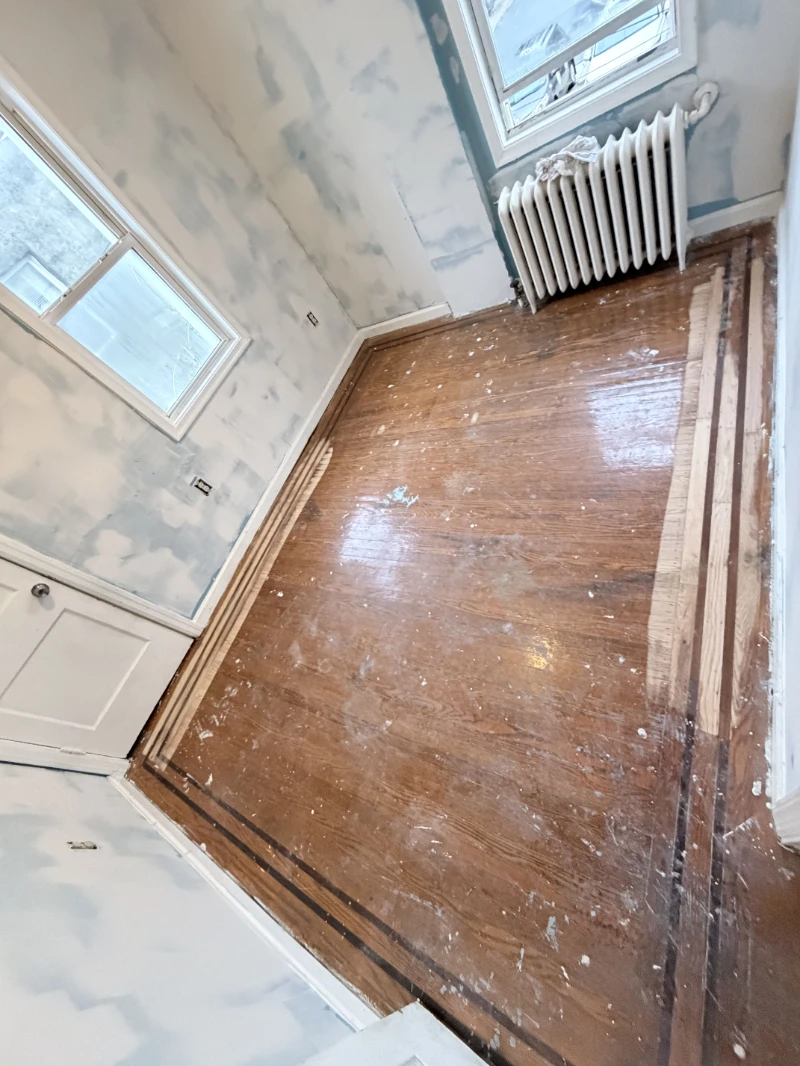
Refinishing sands a wood floor back to bare wood and rebuilds the finish on top.
Refinishing & Sanding
Most articles about refinishing are written to sell refinishing.
Refinishing & Sanding
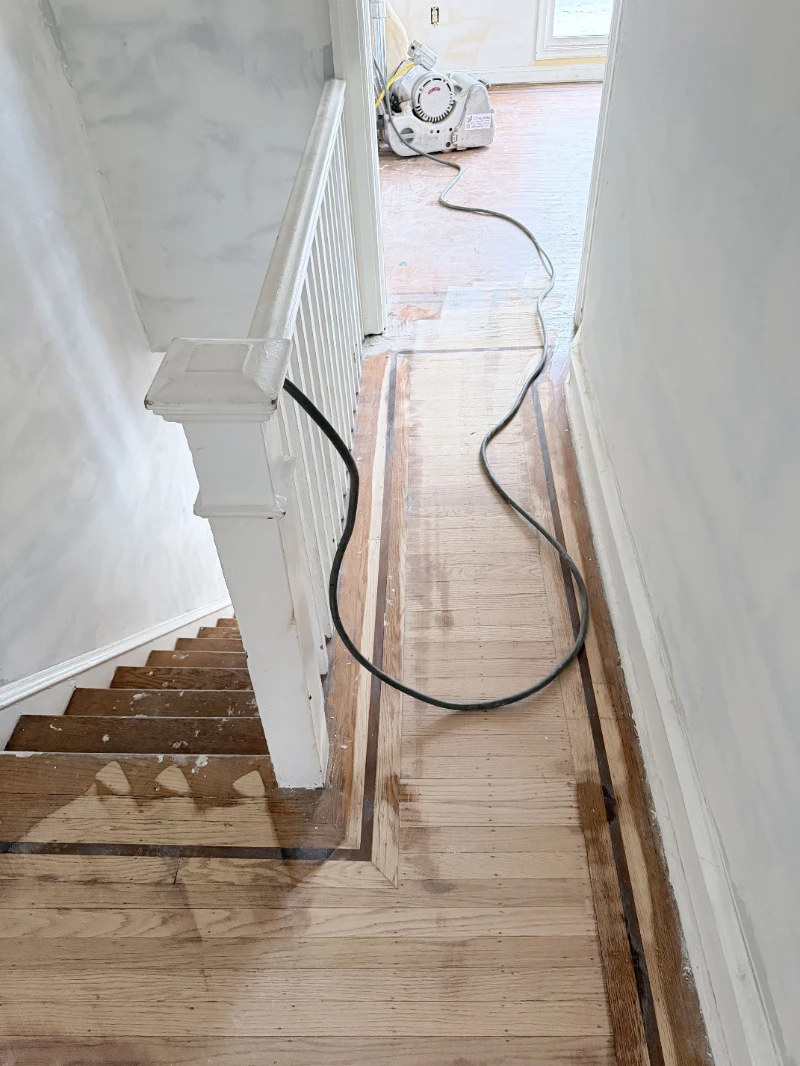
Dustless sanding runs the equipment through a vacuum and containment system, usually HEPA-filtered, so most dust is captured…