
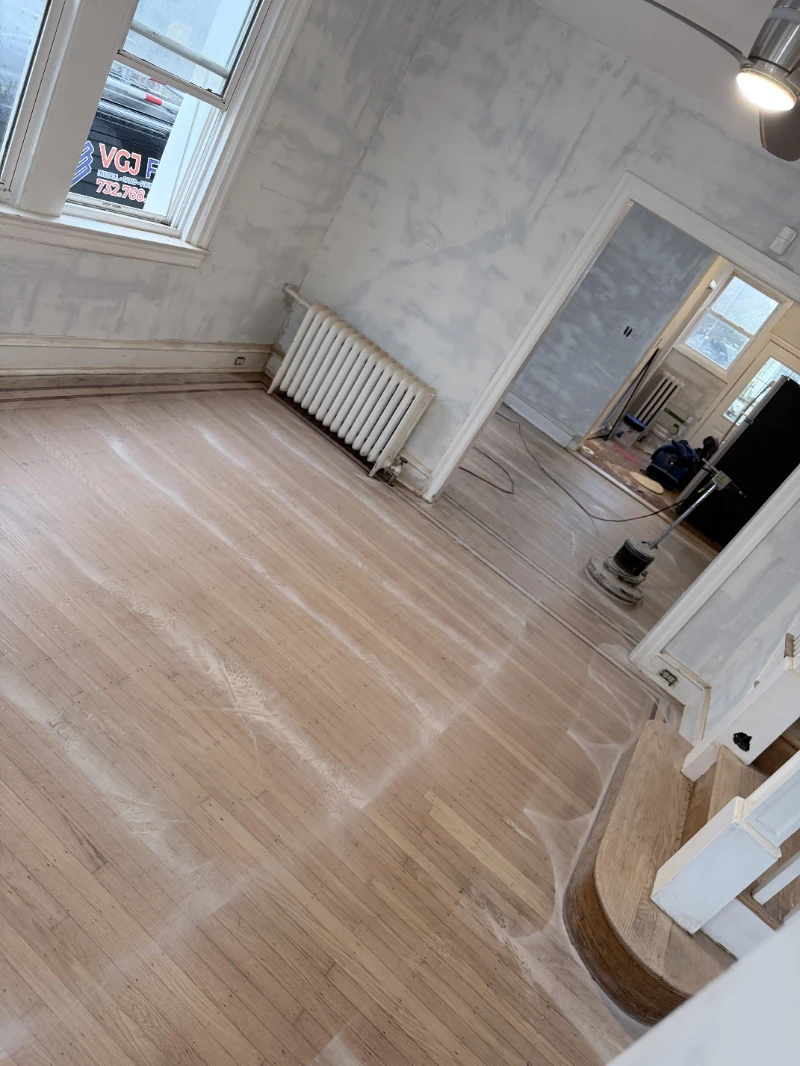
Repair & Restoration
Wood Floor Damage in New Jersey
Three things damage New Jersey wood floors more than anything else: water events, pet urine, and a century of wear on housing…
There are only four things anyone can do to a worn wood floor, and two tests you can run yourself decide which one you are in.
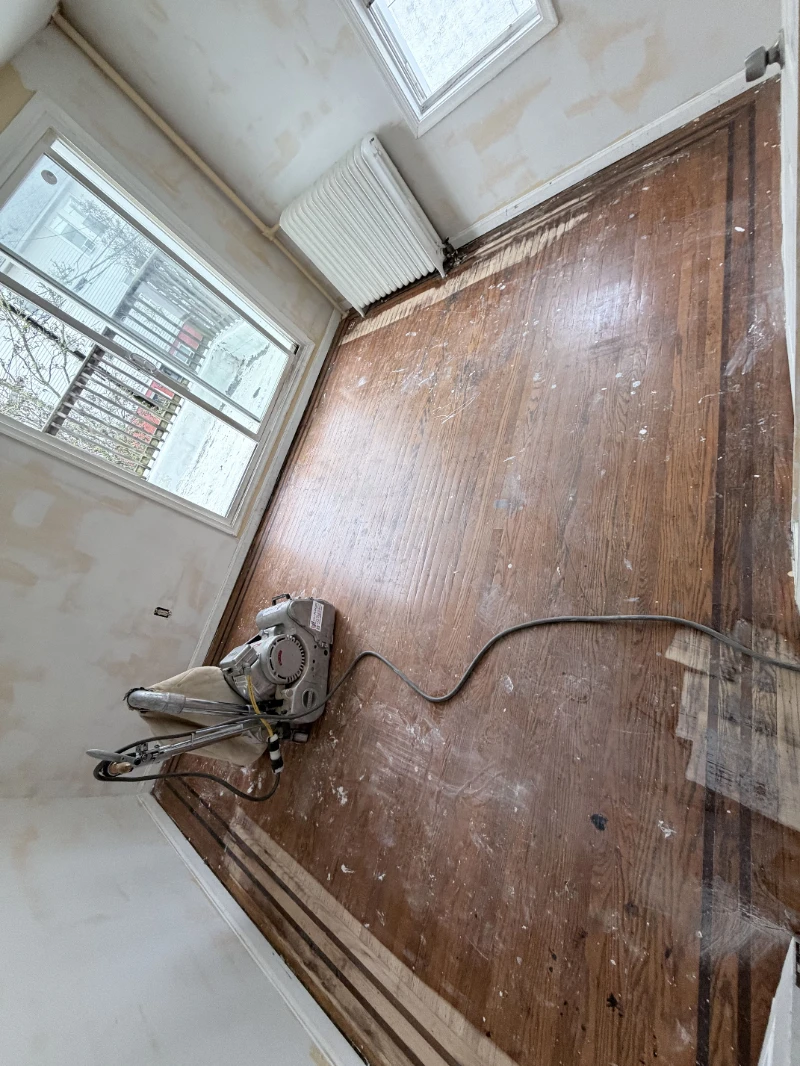
The first tells you whether the finish is still intact. The second tells you whether there is enough wood left to sand. Everything a contractor quotes you should follow from those two answers, and if a quote arrives without either question being asked, that is worth noticing.
Put a drop of water on the floor in a traffic lane. If it is still beaded ten minutes later the finish film is intact and the floor can be recoated. If it darkens the wood or soaks in, the film is breached and recoating is off the table.
Do it where people actually walk: the path from the back door to the kitchen, the turn at the bottom of the stairs. Under the dining table the finish is almost always fine, which is exactly why testing there tells you nothing.
Run it in three or four spots. Floors do not wear evenly, and a house that passes in the living room and fails in the hall is a normal result. It usually means recoating the whole floor now rather than refinishing it in two years.
Lift a floor vent or look at a threshold or a doorway where the board was cut. The cut edge shows you the wear layer directly, without lifting a single board.
Solid strip flooring at the standard 3/4 inch thickness carries roughly 1/4 inch of wood above the tongue. That is the part a sander can take. It is enough for several full sandings across the life of the floor, and a floor that has already had two or three of them has less than the number suggests.
Engineered flooring is a different question entirely. The veneer over the plywood core is what you have, and it ranges from about 0.6mm to 6mm depending on how the floor was made. Below roughly 2mm there is no sanding to be done, only recoating or replacement, and no amount of wanting it otherwise changes that.
If you cannot see a cut edge anywhere, a closet threshold or the board at the top of a basement stair usually gives one up.
Cupping means the underside of the boards is wetter than the top, and it is a moisture problem that has to be found and fixed before anyone thinks about sanding.
The temptation is obvious: the floor is uneven, sanding makes floors even. But sanding a cupped floor flat while it is still holding moisture removes wood from the raised edges. When the boards finally equalise the middle rises and you get crowning, which is a worse defect and costs more to correct than the cupping did.
Find the source. A dishwasher that has been weeping, a crawlspace with no vapour barrier, a basement that runs at high humidity all summer. Then let the floor equalise, remeasure, and sand only once the moisture readings hold steady.
Repair is for damage in a defined area; recoat is for wear still inside the finish; refinish is for wear that has reached the wood; replace is for floors with no wear layer left or with structural failure underneath.
Repair: a handful of boards damaged by a leak, a pet stain, a dropped pan. The rest of the floor is sound. Boards come out, matching boards go in, and the area is blended. This is the cheapest outcome and the one most often skipped in favour of doing the whole floor.
Recoat, also called screen and coat or buff and coat: the water test beads, there are no black stains, and nobody has ever put wax or an oil soap on the floor. The existing finish is abraded and a fresh coat goes on. It does not remove scratches that have reached the wood and it does not change the colour.
Refinish: the water test fails, or you want a different colour, or there are scratches through to bare wood. The floor goes back to raw wood and the finish is rebuilt. It needs wear layer to spend.
Replace: no wear layer, veneer too thin, or a subfloor problem that keeps producing movement no surface work can settle. Also the honest answer when a floor has been sanded so often that the nail heads are close to the surface.
Contamination decides more recoats than wear does. A floor treated with wax or an oil-based cleaner will reject a new coat of finish regardless of how good the film underneath looks.
This is the most common reason a recoat fails, and it fails visibly: the new coat beads, peels or never bonds. A contractor should be asking what has been used on the floor before quoting a recoat, and should be testing a small area rather than taking the answer on trust.
Pet urine is separate. It penetrates past the finish into the wood and often into the subfloor, and sanding does not remove a black stain that has gone that deep. Those boards get replaced or the stain stays.
Someone should be taking a moisture reading, looking at a cut edge of the board, and asking what has been used on the floor. A quote produced without any of those three is a price, not an assessment.
None of this is exotic. A pin or pinless moisture meter, a lifted vent, and two questions. It takes a few minutes and it is the difference between a job that behaves and a job that argues with you six months later.
The most useful thing you can do before anyone arrives is run the water test yourself and know the answer. It makes the conversation shorter and it makes an inflated quote much easier to spot.
Put a drop of water on the floor in a walked-on area. If it beads for ten minutes the finish is intact and a recoat will work. If it soaks in or darkens the wood, the finish is breached and the floor needs sanding.
It depends on wood remaining above the tongue, not on age. Solid 3/4 inch strip flooring starts with roughly 1/4 inch to spend, which covers several sandings. Check a cut edge at a vent or threshold to see what is left on yours.
Only if the veneer is thick enough. Veneers run from about 0.6mm to 6mm. Below roughly 2mm there is nothing to sand and the options are recoating or replacement.
Not while it is still holding moisture. Sanding a cupped floor flat and letting it dry afterwards produces crowning, which is harder and more expensive to correct. Find the moisture source, let the floor equalise, then sand.
Usually not. Urine penetrates past the finish into the wood and often into the subfloor. Sanding removes surface discolouration, not a stain that has gone that deep. Those boards are normally replaced.
Almost always, when the rest of the floor is sound. Board replacement and blending is the outcome most often skipped in favour of doing everything, which is worth questioning when the damage is confined to one area.
Send photos and the town you are in. We will tell you which of this actually applies to your house.
Request a free estimateRepair & Restoration
Three things damage New Jersey wood floors more than anything else: water events, pet urine, and a century of wear on housing…
Refinishing & Sanding
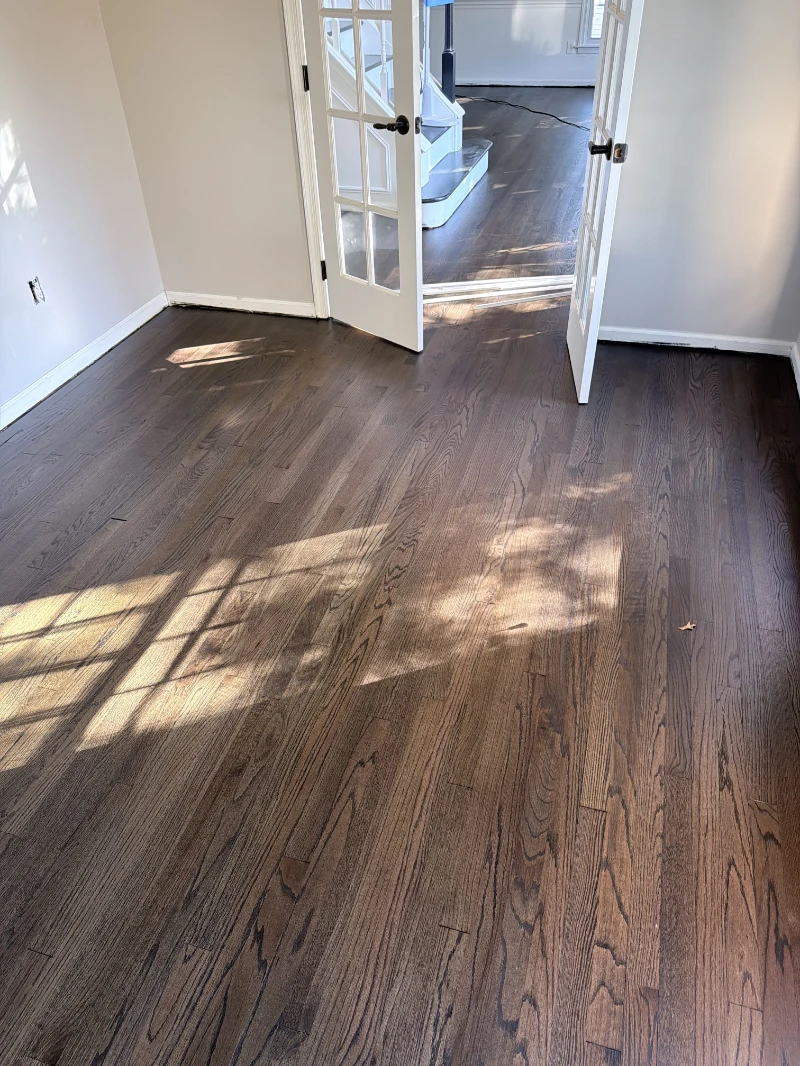
Refinishing sands a wood floor back to bare wood and rebuilds the finish on top.
Refinishing & Sanding
Most articles about refinishing are written to sell refinishing.