
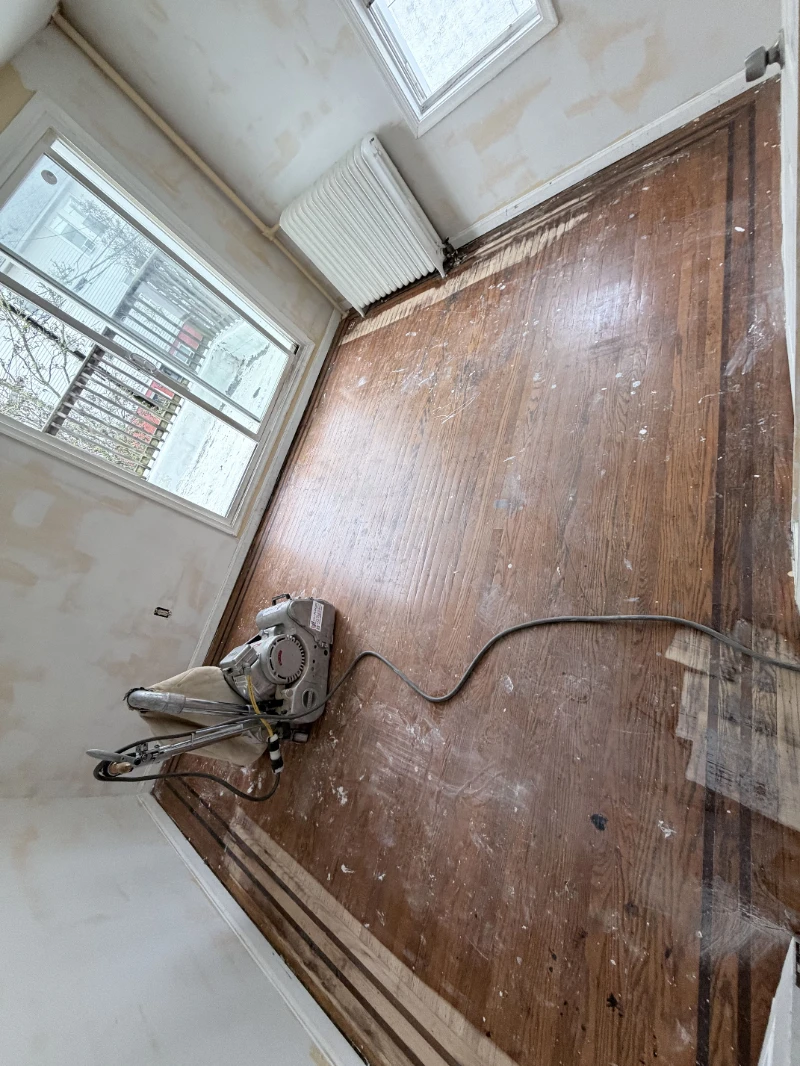
Repair & Restoration
Repair, Recoat, Refinish or Replace
There are only four things anyone can do to a worn wood floor, and two tests you can run yourself decide which one you are in.
Three things damage New Jersey wood floors more than anything else: water events, pet urine, and a century of wear on housing that predates 1940.
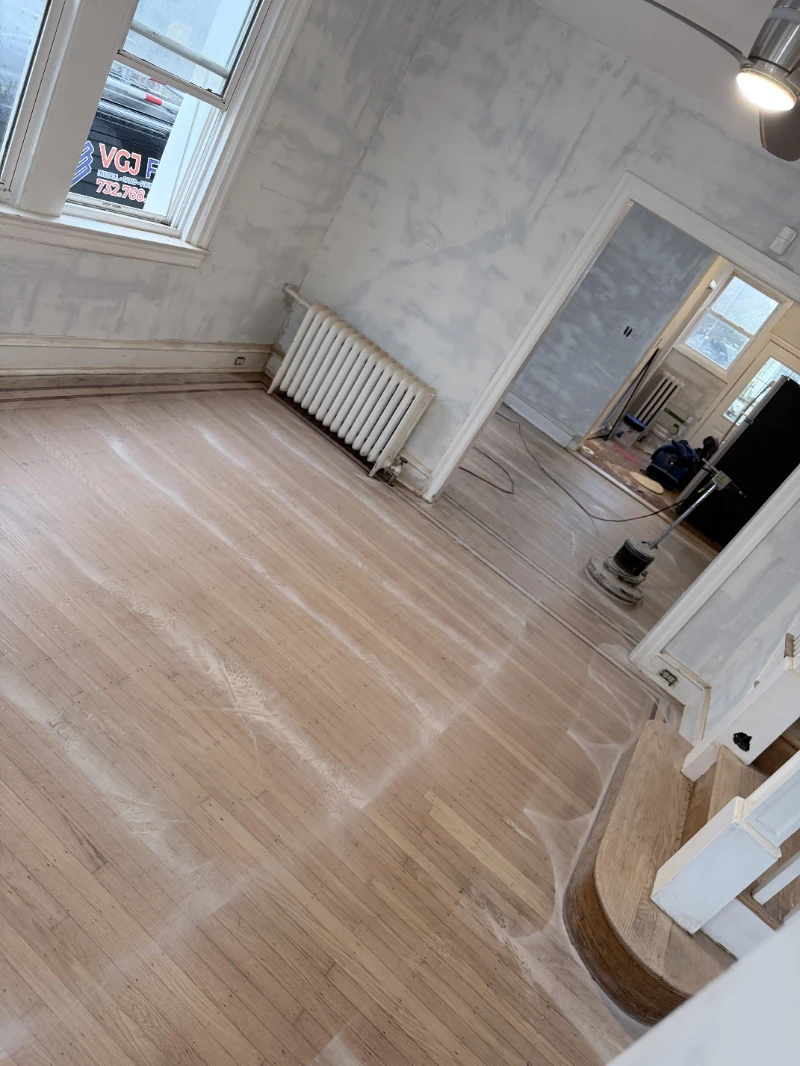
Each one has a different answer, and in two of the three the most expensive mistake is acting too quickly.
Solid wood that looks ruined in week one often flattens substantially as the assembly dries — and sanding before it does produces crowning that cannot be undone.
Cupping means the underside holds more moisture than the top. Drying reverses it, frequently more than anyone expects.
Dry the subfloor and the cavity, not just the visible surface, and monitor with readings rather than by feel. Then decide what actually needs replacing.
Document everything from the beginning — photographs, readings, dates. Insurance claims are decided on evidence gathered early.
Solid wood is one piece of material and can move and come back; engineered flooring that has delaminated cannot, and laminate with a swollen core is finished.
This is worth knowing before a whole floor is condemned. We have seen solid floors written off in week one end as a partial board replacement plus a refinish.
Light discoloration sands out; the dark, near-black staining is a chemical reaction deep in the wood, typically deeper than the remaining wear layer.
You can sand until the board is too thin to be a floor and still see it. Those boards get replaced — anyone promising to sand out a black pet stain is either inexperienced or planning to hide it under a very dark colour.
If odour persists after the flooring comes up, the liquid reached the subfloor. Replacing flooring alone will not solve it, and sealing over an untreated subfloor buys a season rather than a solution.
In pre-1940 New Jersey housing, the limit is usually not the damage — it is how much wood is left after a century of refinishing.
Narrow original boards, sometimes heart pine, often parquet in entryways and landings. These floors are frequently on their third refinish, and the honest assessment sometimes is that there is nothing left to sand.
Where there is, they are worth saving: original material of this age cannot be reproduced at reasonable cost.
Weaving replacement boards into the surrounding pattern rather than cutting out a rectangle, and then refinishing the room so colour and sheen are continuous.
A square patch reads as a patch forever, however well it is finished. And new wood has not aged the way the surrounding floor has, so a repair that is not refinished stays visible even when the material matches perfectly.
Boards damaged by a leak, a humid crawlspace or a failed seal will be damaged again if the source is still there.
Replacing boards under a dishwasher that is still weeping is work that gets done twice, and the second time is at the homeowner's expense.
These are subfloor problems expressing themselves through the floor, not flooring problems, and sanding does nothing for any of them.
A squeak is usually movement between the flooring and the subfloor, or deflection in the subfloor itself. Many can be addressed from above with fasteners set and filled, and some are better fixed from below where a basement gives access.
Hollow spots under an installed floor generally mean the subfloor was not flat when the floor went down. That is a preparation failure, and it cannot be corrected by refinishing.
Scratches in the finish can be recoated; scratches into the wood, dents and burns need either board replacement or a full refinish.
The test is the same one used everywhere else: is the damage in the finish or in the wood. Finish damage is a coating problem; wood damage is a sanding or replacement problem.
Dents are compression rather than removal, and shallow ones in solid wood can sometimes be steamed to raise the fibre. That works on bare wood, not through a finish.
Often not. Solid wood cupping from a single event frequently flattens substantially as the assembly dries. The critical thing is not to sand it while it is still cupped.
Until readings show the flooring and subfloor have equalised. It is measured, not scheduled.
Light surface discoloration usually can. Dark or black staining runs deeper than the remaining wear layer and needs board replacement.
Because the urine reached the subfloor and it was not assessed or treated. Odour returns in humid weather.
Yes. Whether the repair stays visible depends on how much the surrounding floor has aged and whether the room is refinished afterwards.
Send photos and the town you are in. We will tell you which of this actually applies to your house.
Request a free estimateRepair & Restoration
There are only four things anyone can do to a worn wood floor, and two tests you can run yourself decide which one you are in.
Refinishing & Sanding
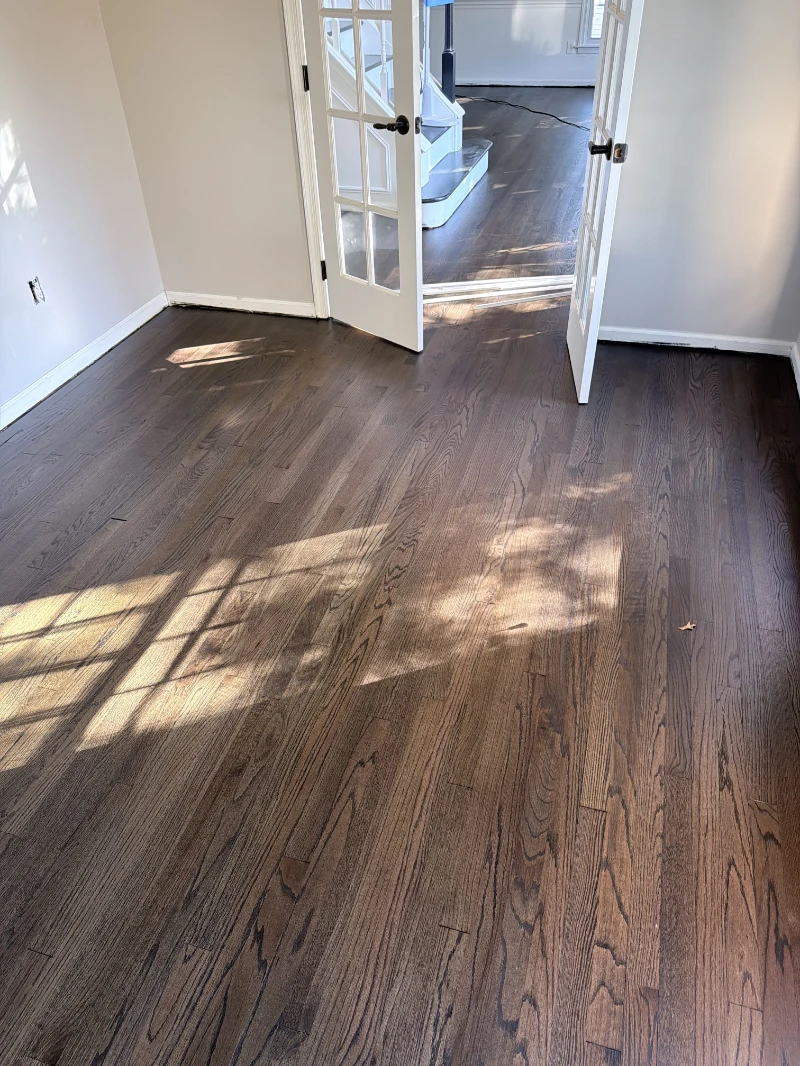
Refinishing sands a wood floor back to bare wood and rebuilds the finish on top.
Refinishing & Sanding
Most articles about refinishing are written to sell refinishing.